
Fat Tail Investment Research Fat Tail Investment Research Fat Tail Investment Research

Forget electric cars,
rockets, even AI…

ELON’S FINAL MOONSHOT

…COULD BE BIGGER THAN
ALL THREE COMBINED

And four obscure Aussie small-caps are
strapping in on the launchpad. Blast-off
scheduled for 10 November 2026.
Take your seat now…
WOODY:

In 2002, Elon Musk looked at NASA…and decided he could do it better.

Aerospace insiders thought he was delusional.

Two years later, he put up $6.5 million to become chairman of a struggling electric car startup called Tesla.

EVs were a joke back then.

Both of these were extreme ‘moonshots’: projects SO ambitious…most people simply write it off at the start.

But today…

Elon’s first TWO moonshots
are worth
more than the
entire ASX 200 — combined.

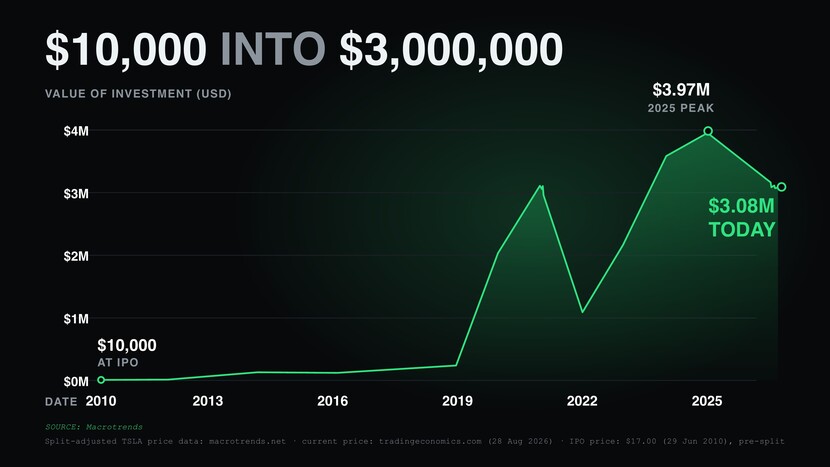
If you backed Tesla early…you did astonishingly well.

...

15 years. $10,000 into $3 million.

That’s the story everyone now knows.

But here’s the one they don’t.

Along the way…companies giving Tesla what it needed to succeed…SOARED in its slipstream.

You never needed to own Tesla stock to profit from Tesla’s rise.

You just needed to own whatever Tesla was going to need in bulk.

Take Contemporary Amperex Technology — the world’s biggest battery maker…

It builds Tesla’s own batteries in Shanghai.

CATL only listed in Hong Kong last year. It’s already up about 135%.

Nobody’s buying them because they love batteries.

They’re buying because these guys make what Elon’s moonshot from 2004 STILL needs…22 years later.

Then there’s Elon’s moonshot two: SpaceX…

…which just pulled off the biggest IPO in history.

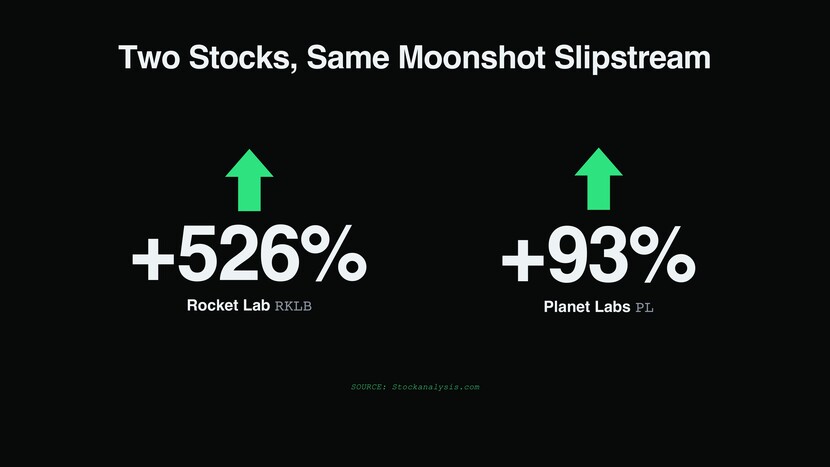
This one had fewer obvious ways in for Aussie investors — but a handful of smaller stocks…like Rocket Lab and Planet Labs

became much bigger stocks in SpaceX’s orbit.

...

Point is…

Elon Musk is now
two-for-two.

While not all Elon suppliers performed like these, historically, those who bet on Musk early — directly, or on what surrounds him — GOT PAID.

Now…

Nobody can promise Elon’s next leap forward plays out the same way.

But we now have a moonshot roadmap.

It tells you where to watch from here.

And right now, almost nobody’s watching what we’re about to reveal today…

Elon’s third — and
final — moonshot

Musk’s final moonshot comes with a shopping list.

The handful of things he needs that he can’t just order out of China.

And four small, largely unheard-of ASX companies are sitting on exactly what’s on it.

And there’s a tight window here…

From 10 November 2026,
the countdown begins.

Miss this window, and you may miss the boat entirely…the same way most Australians only read about Elon’s first two moonshots after the fact.

So who’s going to walk you through this?

Lachlann Tierney

Lachlann Tierney

His name’s Lachlann Tierney.

And he’s not your typical desk-bound equity analyst.

He does the airmiles. Walks the actual sites…and sits across the table from the people running them.

Lachy’s been inside private villa parties in Cape Town… talked with French financiers bankrolling mines …

He consulted for a privately held lithium company sitting on one of the largest deposits on the planet.

He met early with the key guy behind Thacker Pass…the enormous Nevada lithium project the US government has money behind.

Lachy was on the ground in Arkansas at a US lithium summit, hosted by Donald Trump’s previous press secretary. He knows a guy who was called ‘the butcher’ when he was Elon’s chief of staff.

Put simply…

His rolodex runs deep.

Years ago, Lachy’s own father put money into Tesla.

For $16 a share…back when that looked like a reckless bet on a car company that couldn’t yet reliably build cars.

Today those shares change hands for around $350.

That bet has paid off about as well as any in modern investing history.

And it’s the same kind of bet that is informing Lachy’s next FINAL MOONSHOT move.

Lachy, welcome. Let’s not mess about — what’s the Elon moonshot that’s going to shock everyone in 2027?

LACHY:

Thanks, Woody. Hold your horses — we’ll get there. First though: I think you’ve understated this. Especially for Australian investors.

WOODY:

That’s a big call.

LACHY:

I mean it. You’ve given people the ‘what’ — the idea of the next moonshot. What you haven’t given them yet is the ‘who’. And I don’t mean Elon.

I mean four companies that could be about to find themselves standing exactly where this moonshot needs them, in 2027.

They’re ASX-listed, yet none of them operate here.

One’s in the Nevada desert. Two are in Brazil. One’s in the frozen north of Québec.

Four corners of the planet, four different projects — and every one of them is about to matter enormously to a man who doesn’t yet know most of their names…at least as far as I’m aware.

WOODY:

You’re being deliberately cagey about what they do.

LACHY:

I am. Because what they’ve got between them is the whole ballgame, and I don’t want to give it away yet.

What I will say: none of the four are household names. None have a market cap that’d raise an eyebrow…for now at least. All four still trade for less than $1 a share.

Each is sitting on something Elon Musk can’t simply order more of when he runs short. The last Elon push sent the lithium market into the stratosphere.

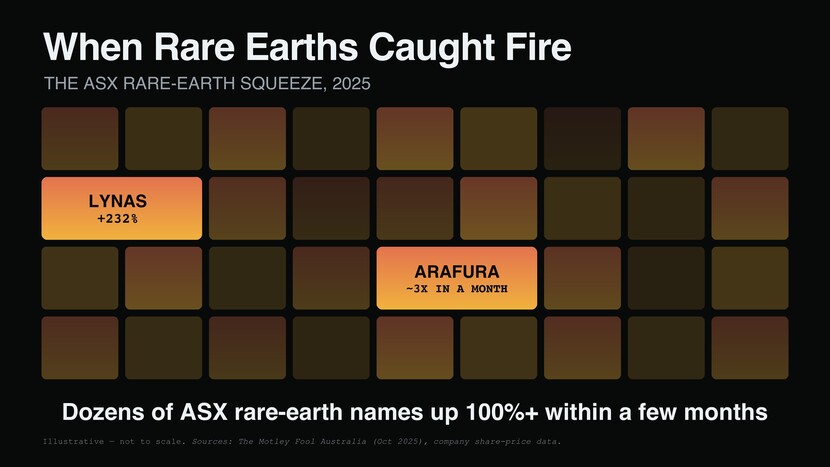
Then there was the rare earth squeeze that happened about a year ago…

...

Lynas rose about 232% across 2025. A bunch of ASX rare earth names climbed more than 100% between early July and October 2025. Arafura doubled inside a single month.

Those were big companies. The ones we’re going to talk about now are smaller and much riskier.

But Woody, the point I want to make is this new moonshot window could be bigger and more lucrative than the lithium and rare earth squeezes combined.

WOODY:

Wow.

LACHY:

I’m not exaggerating. That’s why you’ve made a good call reading this right now, because hardly anyone sees what’s lining up here.

A new moonshot. Then a mad scramble. Then ideally a re-rating of anything holding the right moonshot resources in the right jurisdiction.

WOODY:

Which is where the four plays we’re going to talk about today come in.

LACHY:

Absolutely.

One’s already got a mining billionaire circling it. Heck, she’s even on the register.

Another we’ll talk about is sitting on something so rare almost nobody on Earth has it.

Each one sits at a critical chokepoint in the third moonshot’s supply chain. I’ve been following two of the companies for years…but now’s the time to pull the trigger.

WOODY:

So Elon has a shopping list. And these guys essentially have what’s on it. Well let’s crack into it then…

LACHY:

Bit of background first, Woody.

I was at a mining lunch in Sydney a few years back — couple of dozen execs, analysts, brokers in the room — and two companies presenting were already on my radar…

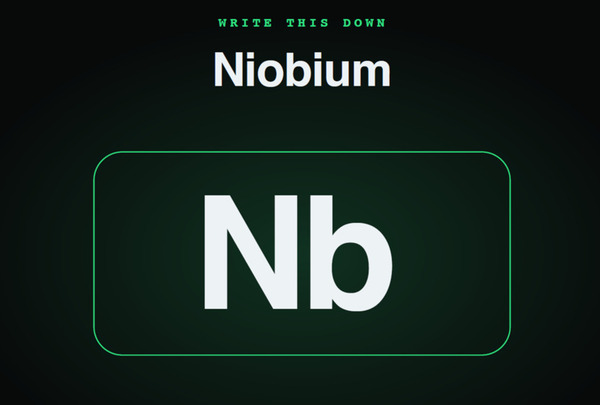
One was a rare earths outfit working land next door to the world’s biggest niobium producer — remember that word — and a clay deposit down the road from it, which sounds unglamorous until you understand why it matters so much.

I met one of the MDs on the sidelines — sharp, subtle, knew his rocks. My old firm invested in his stock early.

A few months later, someone landed on the share register I didn’t expect at that early juncture. Gina Rinehart.

WOODY:

Gina!

LACHY:

And here’s the thing about her and Elon Musk: they’re actually MATES.

In June, she put roughly $1.4 billion of her own money into Musk’s SpaceX listing directly, calling him ‘exceptional, rare, sensible and hardworking’.

Forbes called their relationship ‘increasingly cosy’.

But that billion-dollar headline wasn’t the interesting part.

Months before it, she’d already quietly built a stake in that same small, unknown Brazilian stock I’d found first — roughly $42.5 million, across two raises, both at 10 cents a share, landing her about 10.5% of the company.

WOODY:

So you found it before she did?

LACHY:

It’s not really about who found it first.

The real point is, this isn’t a woman who throws money at speculative ASX names for fun.

When Gina Rinehart moves, she moves for a reason. And once you connect the dots — where else her money’s been going, how close she’s gotten to Musk himself — it stops looking like a punt on one company.

It starts looking more, to me at least, like someone positioning early…around something massive.

WOODY:

Something to do with Elon.

LACHY:

Something to do with Elon. That’s absolutely correct. Specifically, the part of his story almost nobody watching has clocked — where his real endgame stops being about cars, or even rockets…

WOODY:

And becomes what? What’s moonshot three?

LACHY:

Robots.

WOODY:

Robots?

LACHY:

Robots. I’m being very straight up with you. Actual walking, working, physical robots.

And lots of them.

Now, there will be a few switched-on viewers who will have already guessed this is where we were heading.

Most I bet are thinking: Robots? Give me a break!

But take yourself back to 2021. Mid-pandemic, locked down. If I’d told you that within five years you’d talk to a computer like it’s a person — have it write a eulogy, draft a contract, tutor your kid through calculus at eleven at night — would you have believed me?

WOODY:

I would not have, no.

LACHY:

Well, I’ll toot my horn here and say I had a pretty good idea it was coming. I wrote an essay in 2018 with a prediction AI would explode by about 2023. I’ve got the receipts on that.

That’s because I was lucky enough to have access to a private AI engineer forum — and I could see where the tech was going, even at that early stage.

But I was in the minority.

To most it sounded like fantasy.

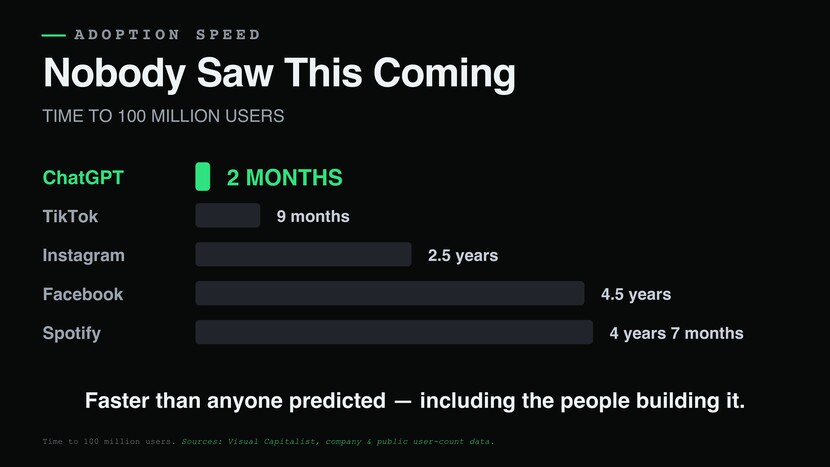
Then it just happened — faster than anyone predicted, including the people building it. ChatGPT went from a research-lab curiosity to a hundred million users in a couple of months. Nobody saw that speed coming.

...

And I think that’s the same thing that’s happening with Elon’s next moonshot. It’s the same story, on a different kind of intelligence.

Starting in 2027, I’m quite confident you’ll start seeing robots turn up in small places first — a warehouse, a factory floor, one or two, then a few more.

There’ll be a 6pm news segment treating it as a bit of a laugh, footage of shoppers gathering around one stacking oranges. It’ll feel exactly like the first time you spotted a Tesla on the road and thought, ‘Huh, one of those.’ A few years later, they were everywhere.

Musk himself has said that by 2040, there’ll be more humanoid robots on the planet than humans. Ten billion of them.

WOODY:

A robot army.

LACHY:

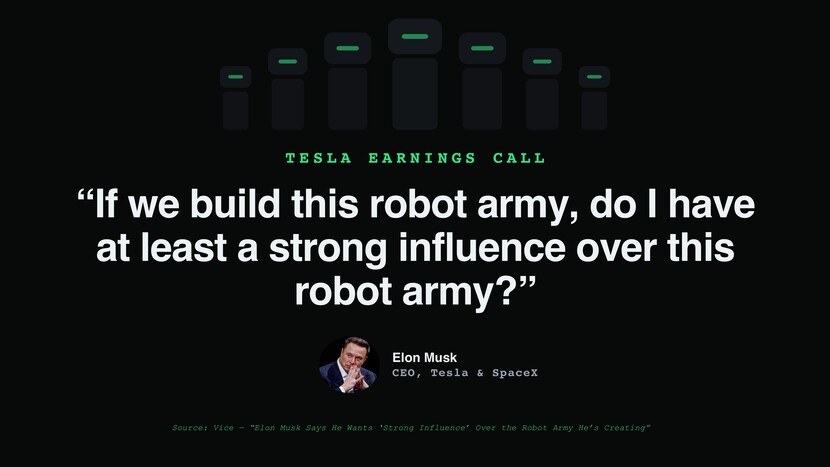
Well, yeah, that’s EXACTLY what Elon called them on an earnings call.

He said to the Tesla board…

...

He ACTUALLY SAID he wasn’t cool with building this robot army unless he had some control over it.

WOODY:

Lachy, do you understand how nuts that sounds?

LACHY:

Well, look, Elon himself is pretty nuts.

And get used to it, because this nuts thing is happening and it’s about to happen FAST.

Which is why you have a very limited window to make the most of the stocks we’re going to talk about.

Now Woody, Musk is known to exaggerate predictions, numbers and the time frames. He’s 80% genius, 10% showman, 10% troll.

10 billion by 2040 I reckon is improbable. But mate, this robot army IS coming.

And I certainly wouldn’t bet against the man. The number has never really been the point with this bloke’s moonshots. The overall direction is. He said a reusable rocket was coming years before anyone believed him, and got laughed at. He said electric cars would go mainstream when the whole industry said they wouldn’t.

Wrong on the date, most times. Right on the destination, both times.

WOODY:

So what you’re saying is, it’s not ‘if’. It’s ‘how fast’.

LACHY:

Exactly. And that gap — between what people can picture and what’s coming — that’s usually where the money gets made.

That day arrives when
Elon fires up Optimus…

WOODY:

Alright — for anyone who hasn’t been following, what is Optimus? I mean, I’ve heard the name in the press loads… In my head it’s still a guy in a metal suit doing a little dance on a stage.

LACHY:

This isn’t a cartoon from the 80s.

I get it, fair enough, that’s where it started.

Optimus is Tesla’s own humanoid robot — Musk’s personal project running alongside the cars.

Roughly your height, your build. Two legs, two arms, hands with fingers, built to walk into spaces designed for a human — a factory, a warehouse, eventually a house — and do the physical jobs we currently pay people to do. Lift, carry, assemble, eventually cook and clean.

The bet is it can go anywhere a person can go, because we built the world for a two-legged, two-handed shape — and Tesla wants Optimus to fit straight into it, not the other way around.

WOODY:

I think there must still be people watching who think ‘humanoid robot’ still sounds like science fiction.

LACHY:

I know it sounds like Isaac Asimov stuff, and that might’ve been true a few years ago. It just isn’t anymore.

This isn’t a ‘one day’ story.

Not many watching will realise that these things are already clocking real shifts on real production lines.

...

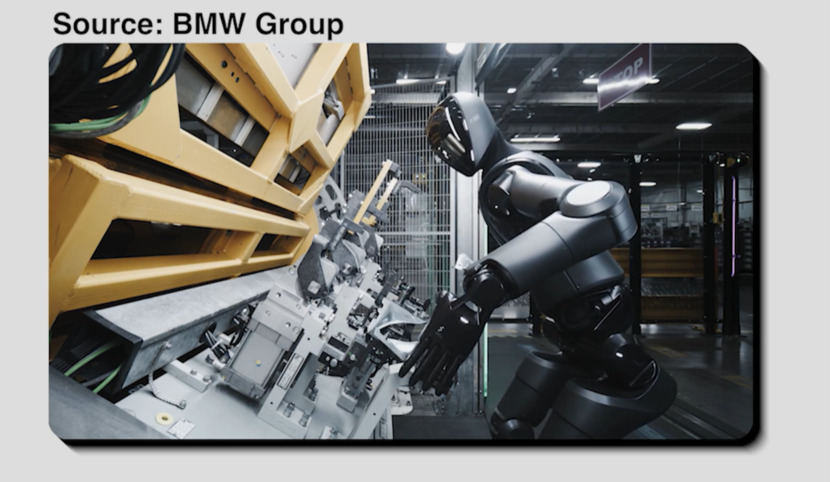
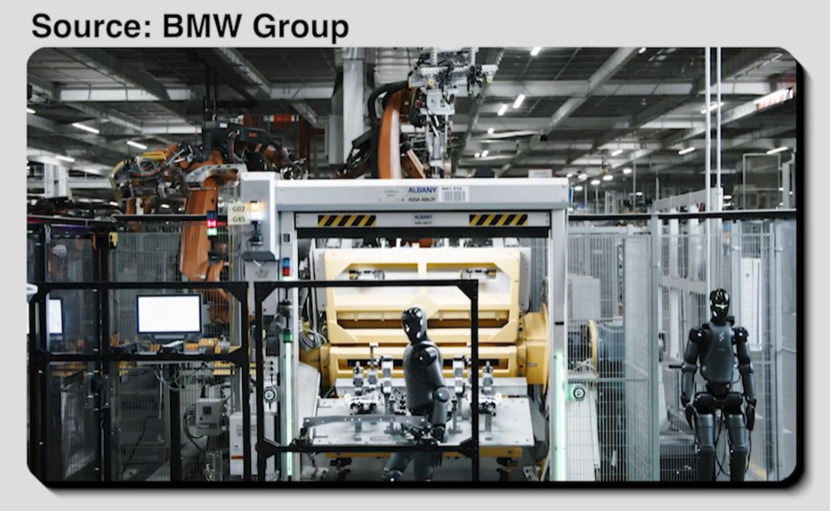
BMW had one on the actual assembly line in South Carolina for eleven months, doing real work on real cars — it helped build more than 30,000 of them.

...

GXO, one of the biggest logistics companies on Earth, just signed the industry’s first paid, commercial deployment of a humanoid robot. Not a trial. Not a demo.

Already generating revenue for the company that owns it.

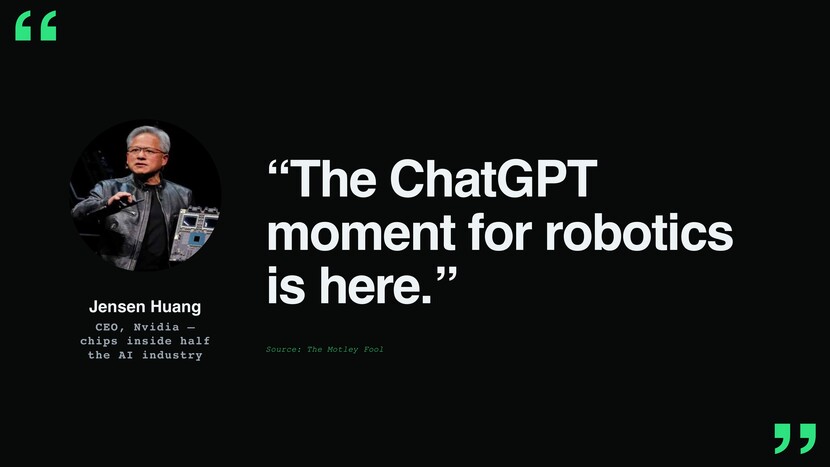
And it’s not just robotics people saying this. At this year’s CES, Nvidia’s Jensen Huang — whose chips sit inside half the AI industry — stood up and said…

...

Woody, that’s not a Tesla shareholder. Well, to be fair, Jensen may hold a few shares through ETFs. Who knows? I’m not privy to his personal portfolio.

That’s the man supplying the picks and shovels to every robotics company on Earth, including Tesla’s competitors, telling you the shift’s already started.

WOODY:

So where does Musk sit in that picture?

LACHY:

Light-years ahead of everyone, as usual.

But he’s also been taking his time. He’s not interested in being ‘first’. He’s interested in completely changing the world with his robot army within five years.

And Woody, I’m betting he’s going to do it.

Tesla ended car production on one Fremont line earlier this year to make room for Optimus. The first units are still collecting training data, not doing productive work yet. Small numbers, slow going. Musk admitted as much himself.

Tesla’s own target last year was 5,000 units. They delivered a few hundred.

I’m not going to hide that from you.

Because it’s the very reason I’m excited about the stocks we’re about to reveal…

WOODY:

Why’s that?

LACHY:

Because these four stocks were never betting on Musk’s calendar. They’re betting on his direction.

They don’t need Musk to hit a single deadline on time. They don’t need 50,000 units in 2027. They just need the direction to keep pointing the way it has since day one — more robots, not fewer.

The ramp-up is coming, regardless. Starting I believe around 10 November this year — we’ll get to that date shortly.

This ramp-up is aimed at a dedicated plant in Texas, targeted for the first half of 2027. That’s the window we’re talking about — and that’s the possible lift-off point for the four ASX stocks I’m about to walk you through.

WOODY:

So we’re not early to the idea. We’re early to the scale-up. That’s the key thing, right?

LACHY:

Exactly right. The idea isn’t speculative anymore — it’s on factory floors already. What’s speculative is who profits from the scale-up.

WOODY:

So who does?

LACHY:

Ideally, those seeing this now who want to move early on what I’m about to show you.

That’s if I’m right on this, and right on the four stocks I’m backing.

Because there’s a catch to this moonshot. A big one. Something standing between where Optimus is today — small numbers, early days — and where Musk wants it: hundreds of thousands of units a year, then millions.

WOODY:

What kind of catch?

LACHY:

Not software or AI. Those are the parts everyone assumes will be the hard bit. And honestly, Tesla’s further along there than people give it credit for.

This is something much more basic.

This is the part I need you to pay close attention to.

There’s a physical bottleneck sitting in the middle of Elon’s entire robot ambition, and it’s not a small one.

It’s the kind of problem that caps how many of these things Tesla can build, no matter how good the robot gets.

WOODY:

And you think he can solve it?

LACHY:

I think he’s going to throw everything he has at it, because he doesn’t have a choice — this is the one moonshot he can’t out-engineer his way around.

And here’s why it matters to us, sitting here in Australia: solving it doesn’t happen in an engineer’s lab. It happens in the ground.

And there are four small, largely unheard-of companies, listed right here on the ASX, who could be sitting exactly where this problem gets solved.

Now, none of these four currently has a contract with Tesla or SpaceX. I want to make that clear. What they have is something else: they hold the minerals Elon’s entire robot ambition runs on.

WOODY:

Alright. So what’s the bottleneck?

LACHY:

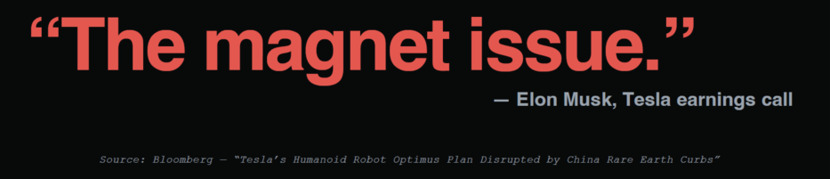
Three words. Said by Musk himself, on a Tesla earnings call, to his own shareholders, back in early last year:

...

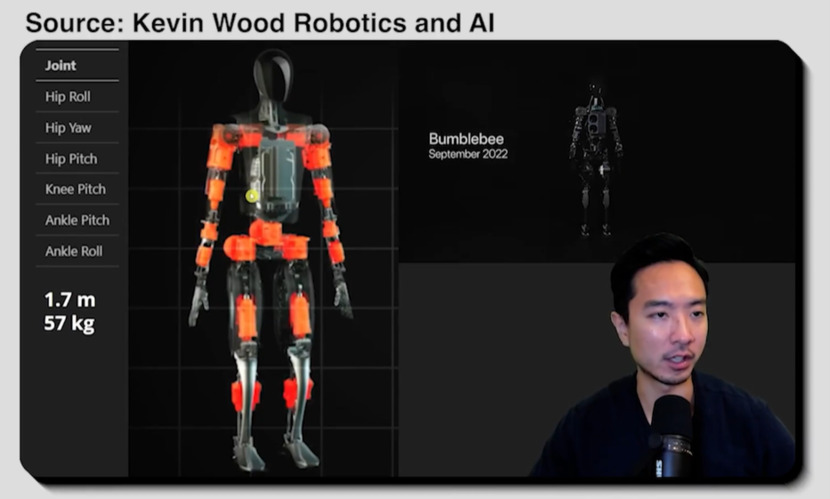
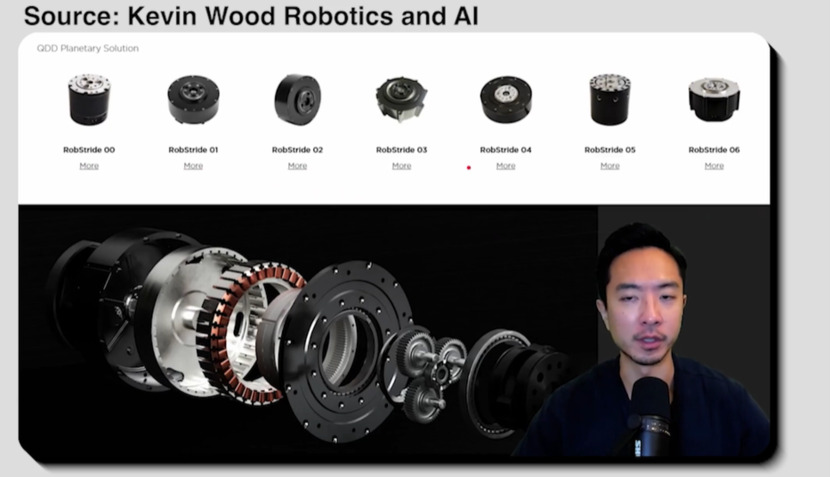
Let me show you why it’s real. Take a humanoid robot apart, joint by joint. Every joint’s got a motor.

...

...

Every motor’s got a magnet in it. That’s not a design choice — that’s just how an electric motor works. And the magnets strong enough for the job are built from a handful of rare earth elements.

CHINA has the lion’s share of these.

And production has been held back, in Elon’s own words, because China now requires an export licence for them.

Beijing doesn’t want these minerals going into weapons.

Some of those controls have eased since, some haven’t. But the underlying problem hasn’t gone anywhere.

WOODY:

How much magnet are we talking about?

LACHY:

Woody, that’s the thing: an EPIC amount. All up, best estimates put the finished magnet weight at around three and a half kilos per robot — roughly double what goes into an electric car, by Chinese industry estimates.

If Tesla hits its numbers at three and a half kilos of magnet each, that’s thirty-five hundred tonnes of finished magnet material. From one company. For one product. In one year.

WOODY:

And that’s not just Tesla’s problem, is it? Every robot maker’s chasing the same magnets.

LACHY:

Every single one of them.

WOODY:

Can’t they just use a cheaper magnet instead?

LACHY:

Not really. Iron based or ferrite’s cheaper, but weaker — you’d need a bigger, heavier motor to get the same power out of it, which defeats the purpose in a robot joint that has to stay light.

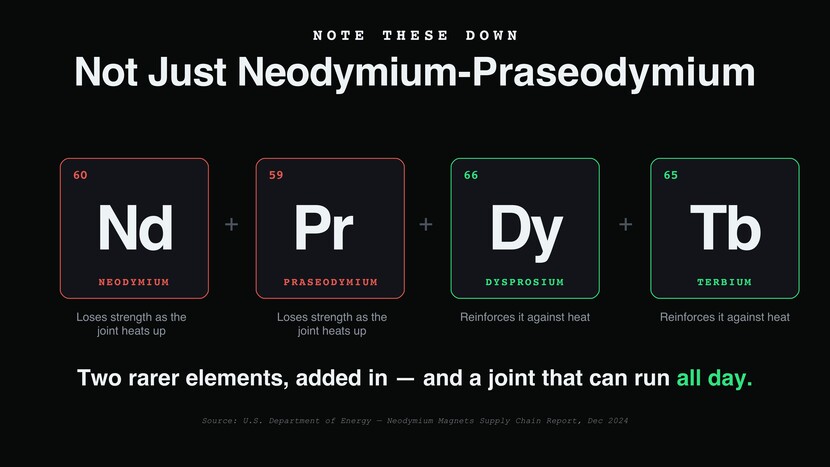
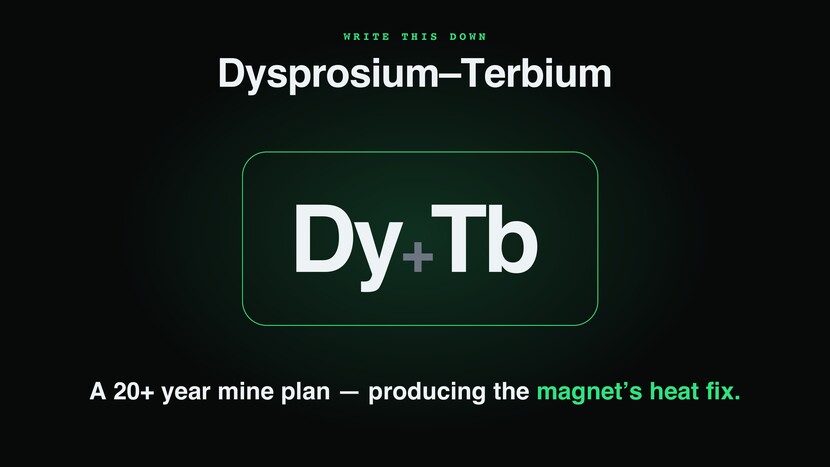
The magnets that work here are neodymium-based, and they lose strength as they heat up — a real problem in a joint working all day. The fix is reinforcing them with two rarer elements…and viewers will want to note these down, too… dysprosium and terbium.

...

WOODY:

But to be clear: we’re not talking a general rare earths rush here.

LACHY:

Not quite. This moonshot bottleneck centres around a tiny cluster of specific elements. And almost all of the world’s capacity to process them sits in one country.

PLAY #1

A Magnet Motherlode

WOODY:

So that’s the bottleneck. Let’s talk about who might benefit from solving it.

LACHY:

First name on the list — we’ve already mentioned them.

The company my old work took a position in before Gina Rinehart took a WAY bigger stake. Small company.

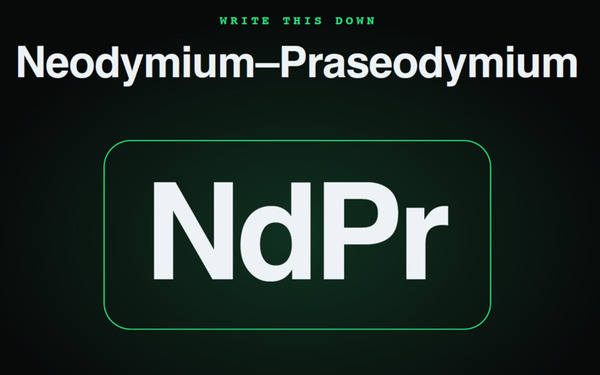
Ground in Brazil — containing a whole load of something called neodymium-praseodymium. NdPr it’s called in the industry.

WOODY:

That’s a mouthful.

LACHY:

I’ll put it here below. Everyone should write it down…

...

It’s ABSOLUTELY KEY to the magnet issue.

I’ve been watching this deposit for years. Long before robots were the reason anyone cared about it. It sits a few kilometres from a town most have never heard of, right next door to a company already producing more than 80% of the world’s niobium. We’ll get to niobium in a second.

Now recently this company updated how much neodymium-praseodymium it can prove is in the ground, and the confirmed portion — the part geologists are comfortable putting a number on.

It’s big.

More than half a million tonnes.

WOODY:

Is that a lot?

LACHY:

It’s a lot. Because NdPr is not just another mining commodity. It is the magnetic muscle inside Musk’s humanoid robots.

Every Optimus Tesla wants to build will need a web of powerful motors — in its arms, hands, hips, knees, ankles and everywhere else it has to move like a human. Those motors need strong, light, efficient permanent magnets.

NdPr is a crucial input.

So, a deposit that size is a crucial resource…

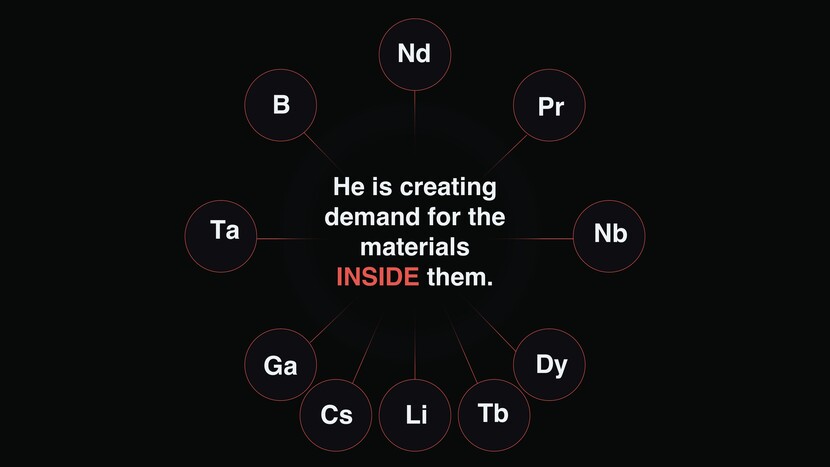
If Elon Musk pushes Optimus into high-volume production in ’27…he’s not just creating demand for robots…

...

That is why a deposit with more than half a million tonnes of high-confidence NdPr could be more valuable than many large gold companies’ deposits.

WOODY:

TO BE CLEAR…there is no inked deal between Musk and this first play, right?

Not even backroom whispers they’re on his radar?

LACHY:

Absolutely not — no Tesla deal here. Not yet.

Let me talk to the scale for a bit here.

This company is sitting on close to four million tonnes of rare earth oxide.

Lynas holds about 4.4 million at Mount Weld, its flagship mine in Western Australia.

Inside that sits a high-grade core, 830,000 tonnes grading above 6%.

Same grade band as Mountain Pass in California, the mine that supplies the US Department of Defense.

Lynas and Mountain Pass are the two biggest rare earth producers outside China.

Now for context, both of those two companies, Lynas and MP, are EACH worth about 30 times more than this company.

So you start to get a sense for the potential upside there.

And this little company still hasn’t finished drilling its own ground.

Here’s the part I like most.

The mineralisation starts at the surface.

Meaning it should be easier to mine.

One drill hole returned 30% rare earths. That was a wild hit.

Then there’s the niobium.

...

Lots of it.

A robot joint only needs a trace. But it’s incredibly rare on the final moonshot shopping list.

It also goes into SpaceX engine nozzles. And it goes into Dragon capsule thrusters.

A second Elon chokepoint the market hasn’t priced in.

WOODY:

Does anyone want the stuff these guys are sitting on yet?

LACHY:

Elon’s not made a play yet.

But there’s a real handshake in place — a US alloy group has agreed to potentially take up to 40% of whatever this project eventually produces. Not a signed contract. But it’s a serious sign of who’s already circling, in addition to Gina.

Now, it’s early. No feasibility study yet. No reserve. No costs or returns published. Everything I’ve just told you is what’s confirmed in the ground — not what it costs to get out, or when. That gap is exactly why this stock is still cheap.

WOODY:

How cheap?

LACHY:

Well, under 15 cents last time I checked, and the whole company’s worth somewhere around $400 million. Treat that as a snapshot, not a quote — by the time you’re watching this it’ll have shifted as it’s so small.

WOODY:

And that Gina stake you mentioned — is it still there?

LACHY:

More than still there.

She’s come back for another bite — close to $42.5 million combined, for something like a tenth of the entire company. That’s not a toe in the water. That’s a serious position.

Look, Woody, if someone wanted just ONE example of exactly what we’ve been talking about — this is it.

A genuine chokepoint, which one of the biggest smart money investors in the world is positioning in…and Musk potentially isn’t even aware the company exists yet.

Unless of course, Gina’s had a quiet word with him…

To my knowledge at least…he is a very smart man though.

That’s this whole thesis,
sitting in one stock

Now, I’m not going to say the name here… although sharp Gina followers might already have clocked it.

I want you guys to stick around for the full list. Our moonshot plays get more interesting from here on…

PLAY #2

Next Stop: Production

Let’s move to Play 2. It keeps us in Brazil — but a different deposit, a different process… Same chain feeding Elon’s magnet problem. Just a lot further down the road towards production.

This one’s a serious buy, right now, in my book.

It’s the most advanced of the four on the shopping list.

This is the only one that’s finished a definitive feasibility study. Not a resource estimate. Not a scoping study. The real engineering-and-costing exercise that will be decisive in the decision to mine this thing.

The economics here are about as clean as this kind of mining gets. It’s run totally on clean power.

It’s not small, either. The mine plan runs for 20-plus years — and it produces the two crucial magnet elements: dysprosium and terbium, the ones that stop a magnet cooking itself when a motor gets hot.

...

WOODY:

What’s the payoff with Moonshot Play 2?

LACHY:

Here’s the number that sells it. Producing works out to around US$11 a kilo, all in.

To put that in perspective…

The US Department of Defense has already locked in a guaranteed price floor of US$110 a kilo. Not a hope — a 10-year contract. That’s Washington putting a number on exactly the shortage Elon’s betting his whole robot ramp on.

Build this anywhere near the study’s numbers…and that gap isn’t a thin margin.

It’s the difference between a

business and a BONANZA…

WOODY:

If it gets built.

LACHY:

Right — it’s not a mine yet. But even at today’s magnet metal prices, this is a project really worth building.

Worth hundreds of millions right now, a return of more than 20–47% a year, and at forecast prices, it pays for itself within two years.

As the final moonshot bottleneck takes hold…and if prices go where the company itself expects…those numbers get a LOT better — the value more than triples, the return nearly doubles, and it pays for itself in half the time.

So in my view, even with a worst-case scenario, it’s STILL worth buying Play #2 at its current price. It’s peanuts.

WOODY:

What else can you tell us about these guys?

LACHY:

Real customers, already circling.

Non-binding for now, but real: a South Korean trading giant, an American magnet maker, a Canadian rare-earths company, and a magnet plant in Estonia have all signed on in principle to buy what this mine produces.

That’s the whole chain, rock to magnet, already talking to each other.

WOODY:

The catch?

LACHY:

Always some catches with early small-cap plays like this, Woody.

It still needs funding and a final go-ahead. So that’s a big IF.

But more than 80% of the ground it sits on hasn’t even been drill-tested yet. So there’s plausibly a lot more ore here than the study assumes.

But it’s pre-revenue, and that’s always a risk with a small-cap.

WOODY:

What about the price?

LACHY:

Low twenties, in cents, last I looked — again a snapshot of right now.

This will jump around all over the place. These are tiny stocks. Huge volatility. You should never sink a cent more in these kind of stocks than you’re prepared to lose…no matter how strong the investing case is.

Everything we’re talking about here is for SPECULATIVE investors only — I want to be super-clear on that. There are zero guarantees.

But if you place just a little bit of money into trying to front-run Elon’s final moonshot, I would consider these first two plays.  

WOODY:

Now, Lachy, you call this his FINAL moonshot. Why?

LACHY:

Well, Tesla already ran. SpaceX already ran. This could be the last of his three biggest bets that regular investors like you and me can still get in early on.

I’m not saying he doesn’t have more tricks up his sleeve. Amazingly, this dude is only 55 years old!

He could have another 30–40 years disrupting the world.

Think about THAT.

This is his magnum opus.

This is what he’ll be remembered for 100 years down the track…

PLAY #3

Four Chokepoints.

One Deposit.

For this next small ASX moonshot, we jump from Brazil to Quebec. Same materials Elon needs.

But the person running this one has already turned a small stock into a big winner once. He’s done this before.

Here’s the simple version of what’s in the ground: primarily it’s a huge, already-proven lithium deposit. That alone would be a solid story. And it’s also attached to Elon’s prior moonshot.

But here’s the exciting bit.

Sitting right on top of that lithium is the single biggest known stash of a metal called caesium — anywhere on Earth.

Caesium is incredibly rare. Almost nobody has any.

This project has the most.

Two other metals Elon needs riding along underneath, for free.

Let’s talk about these.

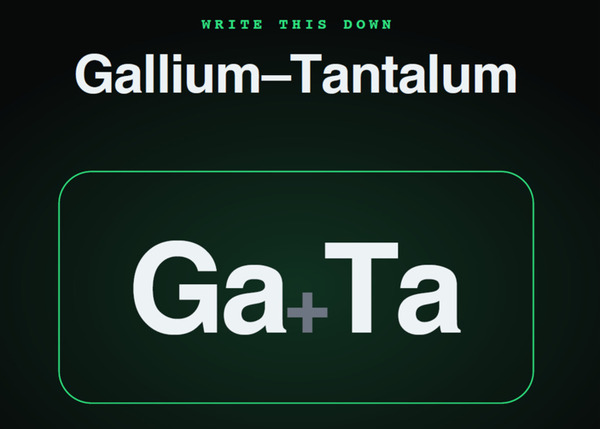
Gallium — early days, nobody’s built a business out of it yet. Nothing to do with robots, but a bit of a bonus. And tantalum — the metal inside the capacitors that go into satellites and planes.

...

One hole in the ground. Three more pieces of what Elon needs. That doesn’t happen often.

WOODY:

But is this company mining?

LACHY:

As far as developers go, it’s moving fast. The government’s already given it the environmental green light — a real step, not paperwork gathering dust. New numbers are due by the end of the year.

WOODY:

And the price for this one? PRIMARILY this is a lithium stock, right? So does that mean it’s a bit more expensive than the first two?

LACHY:

Well, avid investors would know lithium’s already had a bit of a run this year, and that is sort of playing into its price.

But not by much — about 50 cents last time I checked.

And yes, underneath it all, this is a lithium company first. The other three metals are the moonshot bonus we’re looking for. But when the bonus includes the biggest known stash of one of the rarest metals on Earth, that’s a very good bonus.

WOODY:

Alright, before we get to the final play, let’s play devil’s advocate, because if I were watching this at home, this is where I’d start getting uneasy.

Everything you’ve described rests on Elon Musk pulling all this off — the robots, the satellites, all of it. And he’s missed his own deadlines before.

LACHY:

He has. Optimus was supposed to be at real volume by now and isn’t — that’s public, and delays can and will happen.

So let’s be precise about what you’re betting on, because there are two separate bets stacked on top of each other here…and I want you to see both of them clearly before you do anything.

Bet one:

That the physical bottleneck is real, and this buildout happens at real scale starting next year.

Not necessarily his timeline. But all of it — the robots and satellites and AI infrastructure — are coming at genuine scale, and next year all of this should start to really accelerate.

I’d put good money on that one.

Bet two, and this is the one that decides whether you could make SERIOUS money: that these four specific companies get their own projects funded, permitted and built.

The thesis being right doesn’t make the execution easy.

That’s on each of these companies, not on Musk.

WOODY:

So we’ll stress one more time. Risky bets. Don’t sink a cent of your unlosable retirement pot into them.

But it FEELS like this robot thing’s about to happen…

LACHY:

The bottleneck is real. That’s almost a foregone conclusion.

It’s bet two — whether these four stocks I’ve found deliver — that’s the real risk. That’s not a reason to avoid this. It’s a reason to know exactly what you’re holding if you buy in, and what the risks are.

WOODY:

I think people will also ask: Has Musk done direct business with any of these four? Does he even know about them?

LACHY:

Look, he’s smart. He probably knows some of these companies. But if he was public about it they’d be way more expensive.

None of these four companies has a disclosed contract, supply deal, or offtake agreement with Tesla or SpaceX. What they’ve got is exposure to the raw materials his programs need — not a relationship with him. YET.

Now, all four of these companies don’t have a dollar of revenue yet. This is early-stage resource risk…same as it’s always been. But I think what Elon’s cooking up here could be mind-blowing. The kind of set-up you don’t see often.

Potentially far bigger than anything you’ve seen from lithium or rare earth stocks in the last 20 years.

And they’ve made Aussie investors who caught the right ones early crazy money.

I think some of these could be worth multiples of today’s price in a few years. But at least one could go to zero. So don’t put in a cent you’re not prepared to lose.

The payoff for being early and right, on stocks this small, doesn’t look like anything you get from being early and right on Tesla or SpaceX at this point. A large-cap moving 20% in a year is a good year. A microcap catching a real re-rating can move that in a week.

For instance — we’ve been talking about niobium. When WA1 Resources hit high-grade niobium at its Luni discovery in WA a few years back, the stock rocketed 35% in a single week on drill results alone…before running further still in the days that followed.

That’s the trade you’re making: a much higher chance of losing some or all of it, against a payoff that, if it lands, isn’t measured in the same units as blue-chip investing.

WOODY:

Alright. What’s your final pick for us?

PLAY #4

The Final Component

LACHY:

Final play’s in the Nevada desert — already permitted, with serious backing already in place.

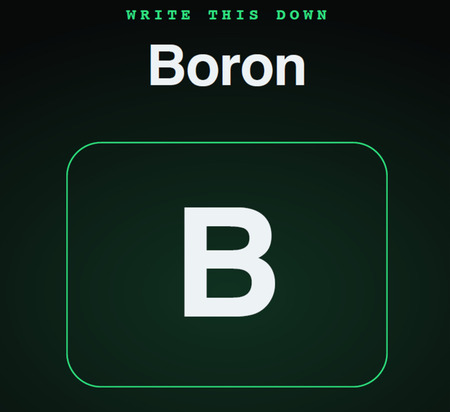
This last one’s got a different element buried in it: boron.

...

It’s cheap, and the world’s not short of it. But it’s the one material touching all three pieces of Elon’s final moonshot at once — the magnets, the space hardware, the defence side.

Every stock on this shopping list covers one part of that chain. This one’s what holds all of it together. Nobody’s watching this one. That’s exactly why it’s the final play.

One of only a handful of deposits like it anywhere on Earth. It’s also really useful in nuclear, by the way.

And this one company owns the whole thing outright — no partner to split it with. Big enough to run for most of a century.

Here’s why I’m moving on these guys…

In June, the US Army signed an actual lease — a real site in Utah — for a defence-grade boron facility there. That’s on top of the near-billion-dollar federal loan already backing construction.

And the company’s targeting a final go-ahead on the whole project before the end of 2026. Not five years out. Now.

Pretty much every broker covering it rates it a buy right now. I don’t normally place broker buys as an important data point, but in this case I will. Interest is rising even in mainstream circles.

Price targets running THREE TO FOUR TIMES where it’s trading.

That’s the market’s own read, not mine — but nobody’s calling this one ‘someday’ anymore. It’s still pre-revenue. And about 12 cents a stock last time I looked — same rule as the rest, a snapshot that may have altered when you watch this.

WOODY:

That’s all four.

LACHY:

All four. Before we close this out, one date worth putting in your diary.

Last October, China gave itself the power to block exports of almost anything on Earth with even a trace of Chinese rare earths in it — didn’t matter who made it, or where. Days later, under pressure, they agreed to pause enforcing it, for one year.

That pause runs out on:

10 November 2026

WOODY:

We’ve put this out ahead of that — so by the time someone’s seeing this, it might already have passed.

LACHY:

Exactly. If you’re seeing this before the 10th, that date’s still coming. If you’re seeing this after, date’s passed. Go check it.

Either way, China hasn’t gone soft during the pause — they’ve kept hitting specific companies with targeted restrictions right through it, including the supplier out of California we mentioned earlier, back in June.

I’m not predicting a cliff-edge on the 10th.

I’m telling you the date the market’s watching, and why smart money doesn’t wait for the headline. And if it gets extended again? The case doesn’t go away — it just runs a bit longer.

Point is, these four stocks solve the actual bottleneck.

And that date is VERY interesting, a possible catalyst.

WOODY:

So that’s the list so far. Four small ASX companies, four different stories, all connected to the same buildout. Where do people go from here?

LACHY:

Let me pull back for a second and remind everyone what we’ve been talking about here.

Two of Musk’s moonshots already happened…and by the time ordinary people could act on either one, most of the money had already been made. Mostly by the insiders. But also by a few switched-on retail investors who saw what was coming and bought stocks in the moonshot orbit while they were cheap.

This moonshot that’s about to be ignited by Optimus…but also fuelled by the space stuff Elon is firing up…is different.

Because the best opportunity isn’t in Musk’s own stock.

It’s in four small, obscure companies sitting on the handful of things he can’t build any of what he plans without — and right now, almost nobody’s watching them.

As I mentioned, that 10th of November date may well change that.

I think there could be more and more eyeballs on these stocks after that.

So if you think you MIGHT want to take positions, consider doing it NOW.

But I also want to stress this is a moving picture, not a snapshot.

New moonshot chokepoints will turn up every year — I’ve built a career finding them before the crowd does. Plays #5, #6 and #7 don’t exist yet. But they will. For the time being, though, these are the four you should focus on if anything we’ve covered so far has lit you up.

WOODY:

So what have you put together for people who want in?

LACHY:

I’ve written up all four of these — names, tickers, the numbers, what to pay, when I’d get in and when I’d get out — in a single dossier called…

...

WOODY:

Manifest. Like a cargo manifest.

LACHY:

Exactly that.

Four shopping list items. With everything Musk needs and can’t get from China without permission. And I’ve laid out the stories behind these four stocks…and the runways in front of them…in plain English. You don’t have to buy any of them. But if you’re on board, I think you should buy soon.

You’ll get instant access to The Moonshot Manifest the moment you take out a membership to Australian Small-Cap Investigator — that’s my monthly research service.

...

WOODY:

Just so everyone watching knows, Australian Small-Cap Investigator has led the alterative Aussie investment scene over the last 20 years.

LACHY:

Since 2006, yeah. And it’s still pretty under-the-radar. Most people have never heard of it.

Because we were never built to be heard of.

Think about how mainstream finance coverage actually works — commercial TV, the newspaper business pages. That’s advertiser-funded…built for a mass audience…covering stocks big and liquid enough for millions of casual viewers to trade at once.

A fund sitting on billions can’t even take a real position in the companies we’re talking about today.

So the coverage just…stops.

Not because anyone’s hiding these companies. They’re just too small for that machine to bother with.

We’re funded the opposite way — by members…who pay a tiny, flat annual fee.

Not advertisers or brokers. So we’ve got no reason to chase the same blue-chip stocks everyone else is already shouting about.

WOODY:

So the obscurity’s not an accident.

LACHY:

No, it’s the whole point.

I’m not your broker. I’m not on Ausbiz telling you to buy the same 20 companies everyone else already owns.

I hunt for the companies nobody’s covering yet — because that’s where the mispricing lives. And you’ve just watched exactly what that can look like if you make the right moves.

Tesla and SpaceX get wall-to-wall coverage. Every outlet, every day, every number Musk puts out dissected within the hour. The four companies I’ve just shown you? Barely a mention anywhere.

That information gap is where Australian Small-Cap Investigator sits.

If you’re following mainstream advice, most of your money’s sitting in an index fund — built to hold what’s already big…not find what’s about to be.

The S&P 500’s top 10 now make up 40 cents of every dollar in it, more concentrated than the dotcom peak’s 27.

The real opportunity’s in the smallest names, not the giants everyone’s piled into.

That’s where Australian Small-Cap Investigator comes in: bet on those giants, or go the other way.

I spend my time where mainstream coverage barely looks — overlooked companies sitting on exactly what a big story needs, before anyone else notices.

The Moonshot Manifest — and everything we’ve covered here — is a perfect example of exactly that. We go looking for tiny stocks hiding inside a critical information gap.

That gap is what I’ve spent my whole career inside.

And it’s exactly what you’ll be exploiting the moment you join Australian Small-Cap Investigator today.

WOODY:

Before we get to that, proof’s in the pudding, Lachy…What’s your current track record like?

LACHY:

At the moment, pretty darn good, Woody.

An average gain of 43% across 18 open positions.

Hold period is currently around 500 days.

Again, that reflects our long-term outlook for these companies.

For context — the ASX 200 had a genuinely good year in 2025, up about 10%. The average actively managed Australian share fund — the ones charging a fee to pick stocks for a living — only returned about 5%.

Half the index.

And in the small- and mid-cap space specifically, where these guys are supposed to have the edge, close to two in three still couldn’t beat their own benchmark.

That’s the professionals, in a good year for the market.

In a year where small-caps themselves have mostly gone backwards.

WOODY:

43%, across 18 open positions, isn’t luck. That’s genuinely rare.

LACHY:

I won’t argue that. And we put serious work in here.

Some of it’s discipline — taking the win when it’s there to take, and being honest enough to wave the white flag on the ones that aren’t working, instead of hoping they turn around.

But honestly, Woody?

That 43%, while I’m definitely proud of it, is not really the point with ASI.

What we’re hunting for is closer to a one-in-five game.

Four positions can sit around doing not much — a bit up, a bit down, nothing to write home about.

What you need is for just one of them to go properly stratospheric — small-cap to large-cap, in a few years.

Get that right just once, and it doesn’t just help the numbers. It makes everything else in the portfolio close to irrelevant.

Research going back a century says basically the same thing about the whole stock market — something like the top 4% of stocks account for almost all the real wealth it’s ever created.

The rest roughly wash out.

Small-caps are just that principle running faster, and closer to home.

And that’s the principle driving
Australian Small-
Cap Investigator

The Moonshot Manifest contains the four plays and the big theme I’m most excited about now.

But this is an ongoing project.

I delve deep into these themes…put in the airmiles and the legwork.

I don’t take a cut from anything I investigate and recommend. My job is finding the four or five companies worth your attention out of the hundreds that aren’t, and telling you plainly when I’ve got it right or wrong.

WOODY:

Important to point out: ASI is not a pure mining stock advisory, right?

LACHY:

Right — great point, and I want to be clear about that, because today we’ve leaned hard into mining and rare earths, for good reason.

This is Australia. This market’s stacked with resource companies. And when the story’s a global materials bottleneck like Musk’s magnet problem, the mispricing genuinely does live in a mining stock.

That’s just where this particular information gap we’ve been talking about sits.

But the actual discipline isn’t ‘find MINING stocks’.

It’s ‘find the information gap, wherever it is’. Some months that’s a driller in the Pilbara. Other months it’s got nothing to do with a drill rig at all.

We’ve got industrial plays sitting in the portfolio right now. We run a subsection called AI Collision Stocks — companies positioned in the physical supply chain feeding the AI buildout, not the chatbot layer everyone’s already crowded into.

And we’ve got a whole Innovation and Technology section, currently sitting on an average gain of 29% across two open positions.

So, no — mining’s a big piece of the book. But if the next Musk-sized bottleneck turns up in software, or defence tech, or somewhere nobody’s looking yet, that’s where I’ll be.

WOODY:

Alright, I’m fairly sure those watching who want in just want to know how much it costs to join.

What is it?

LACHY:

Well, today you can take a look at all the research we’ve talked about and receive everything I’ve mentioned so far…

At absolutely no risk to your subscription fee for the next 30 days.

That means you can download everything today, review it, and if you do not feel the ideas you’ll learn could benefit you, simply request a refund of the fee you pay.

And that fee is usually $299.

Professional fund managers could pay more than $40,000 a year — for a single Bloomberg terminal. That’s before they’ve even worked out what to do with the data.

Ongoing financial advice in Australia now costs a median $4,668 a year — and most of that has nothing to do with getting you ahead of what we’ve been talking about today.

$299 is crazy bang for buck.

But today, you won’t pay anywhere near even that.

Today you can join Australian Small Cap Investigator for just $99.

That’s a two-thirds discount if you click the ‘JOIN NOW’ link below.

Look, I know that kind of mark-down on something already this affordable can smell like a marketing gimmick.

And sure, I’d like as many like-minded members as possible.

But the truth is, that $200 discount is tied to the November 10th clock I mentioned earlier.

This window’s open right now — it won’t stay that way for long.

This is one of the best speculative opportunities I’ve come across in years.

$99 gets you in. Let’s see how this plays out together.

WOODY:

No one really has cash to splash these days, but $99 really is nothing.

If you’re even remotely interested, come on board, get The Moonshot Manifest, plus FULL membership to Australian Small-Cap Investigator for 12 months.

Lachy, what does that $99 membership get you?

LACHY:

...

First off, you get access to the whole live portfolio, not just tonight’s four — every position I’m already holding, already vetted, ready to act on today if it’s still in the buy zone.
Plus a proper getting-started kit, so day one isn’t spent guessing where to click.

Every month, a fresh idea lands — a full special investigation into something new, almost always with a recommendation attached.

Most important is what happens after you buy. I’ll tell you when a catalyst hits, when it’s time to bank half, when it’s time to take the lot off the table, and when to cut and walk away. Buying’s the easy half of this game. I stay with you for the hard half too.
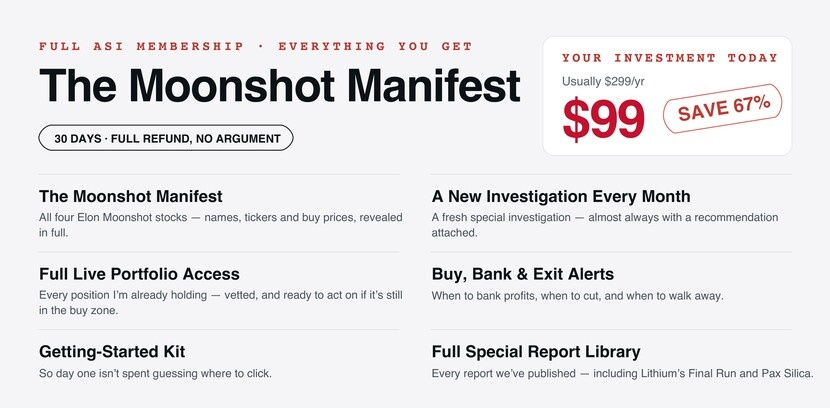

You’ll also get full access to the whole special report library.

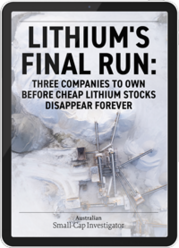
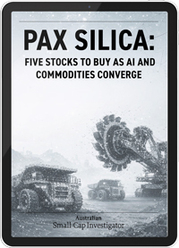
You’ll want to pay close attention to the two recent investigations — Lithium’s Final Run and Pax Silica: Five Stocks to Buy as AI and Commodities Converge.

Many of those picks remain below their buy-up-to prices.

WOODY:

That’s a heck of a lot of firepower for under a hundred bucks. And it comes with a 30-day membership refund guarantee. 30 days, review everything. Go over The Moonshot Manifest with a fine-tooth comb. 

If, for any reason, you decide this is not your bag, no problem. We will refund your $99 in full. No argument. Contact the team, get every cent back.

LACHY:

Yeah — small-cap investing is not for everyone, so I’m not trying to trap anyone into a subscription. I’m trying to get as many people as possible positioned, because I think this matters more than most of what’s crossed my desk in years.

WOODY:

Last word?

LACHY:

Just this: you can lose money on stocks like these, and you should never put in more than you can afford to lose. I’ve said that all the way through, and I mean it now more than ever.

But if the thesis is right, this is the same moment lithium was in, before Kidman Resources signed with Tesla and the whole sector moved.

Elon’s had two moonshots already. This is the third. And almost nobody’s positioned for it yet. The Moonshot Manifest is how you fix that.

WOODY:

$99.

30 days to change your mind.

Starting right now.

Click the ‘JOIN NOW’ link below. And we’ll see you on the inside.

...