JAMES ‘WOODY’ WOODBURN:
Not long ago, on a Tesla earnings call, Elon Musk revealed something shocking.
He told shareholders that Optimus — his humanoid robot — the product he says will one day be bigger than everything else Tesla makes combined...
...had stopped scaling.
Not because of a software problem.
Not because of a supplier dispute.
But because of THIS.
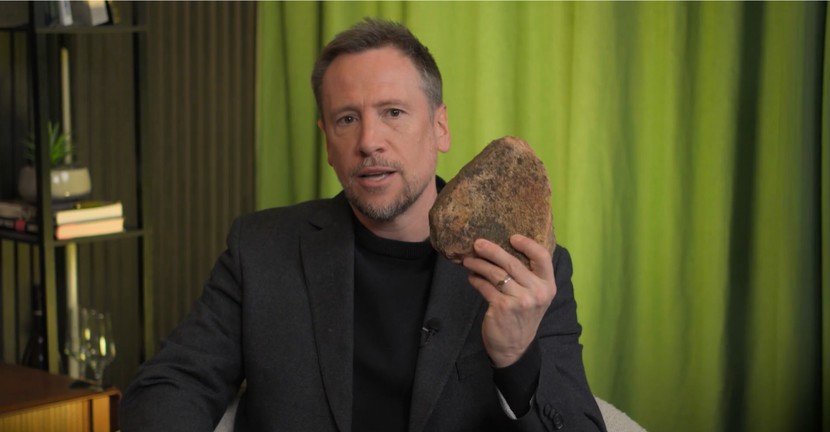
A lump of metal…contained in rock ore…just like this one. About three and a half kilograms of it — that Elon Musk could not get his hands on.
Think about that for a moment…
The richest man in history...running the most ambitious industrial project in history...stopped dead.
By a rock.
Now, Elon’s confession revealed something that few people truly understand yet.
The enormous tech expansion we’re all living through — everything from AI models like ChatGPT…to autonomous cars…to drones…to the data centres being built by the hundred all over the world…
It all relies on the same narrow band of natural resources. Mission-critical metals and minerals now at the centre of an historic bidding war.
According to McKinsey, $5 trillion is being mobilised to build the infrastructure for the AI age.
But none of it becomes a reality without the diggers and drillers who can supply the raw materials it needs.
And THAT is precisely why we are here.
Today, we’re going to give you our best ideas on how to take maximum possible advantage of this phenomenon…
We’ll show you why we believe demand for these resources can only explode from here on out…
And we’ll hand you the name and ticker of one move you can make today — completely free — to get ahead of it.
Welcome...to the Super Bid-Up.
AI doesn't run on code — or algorithms.
It runs on rocks.
Copper. Rare earths. Uranium. Gallium. The raw physical materials every server, every superchip, every battery and every next-generation robot is built from.
And there simply aren’t enough of them to go around.
The market has already started to figure this out. Look at what’s happening to certain mining stocks at the very frontier of this story:
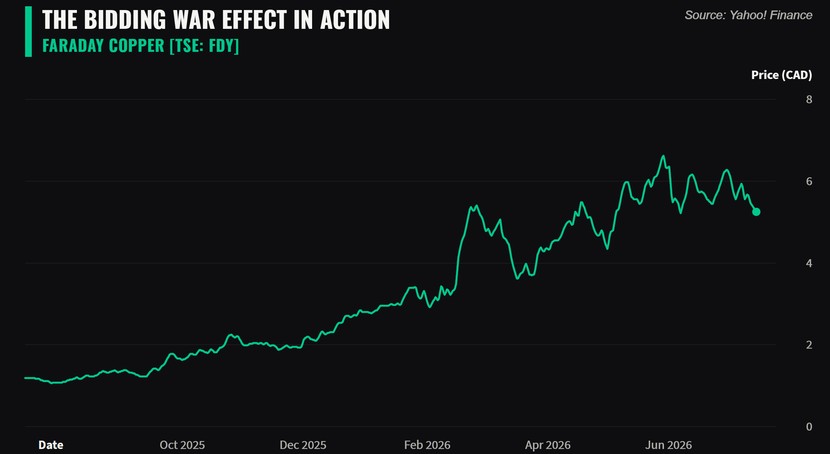
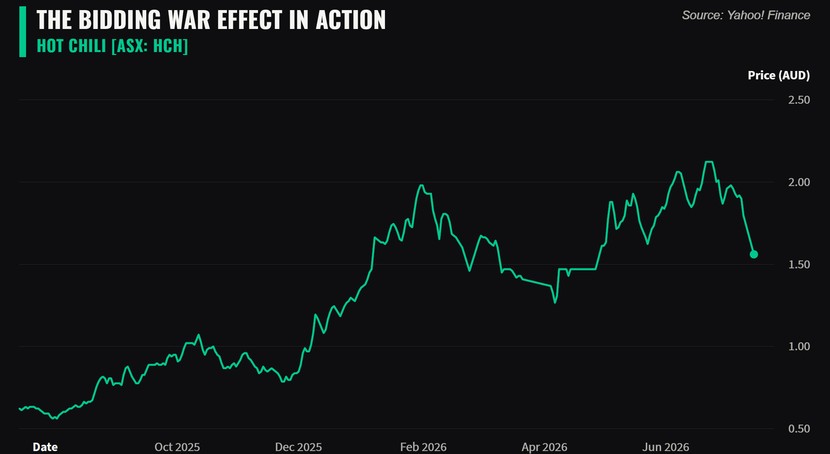
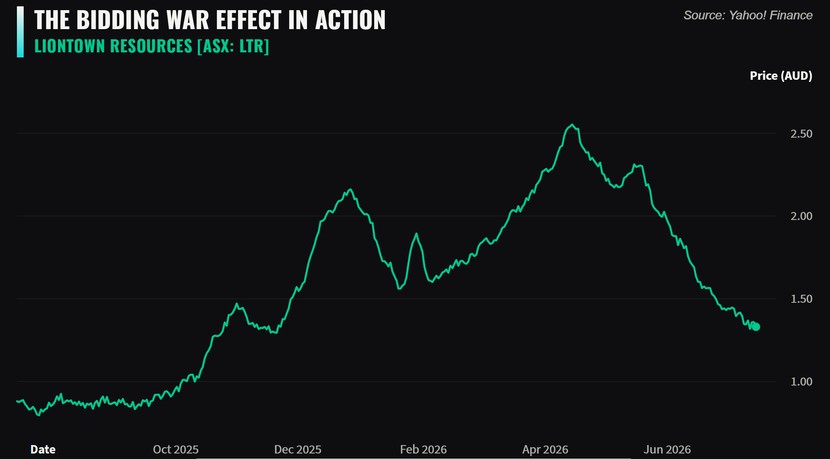
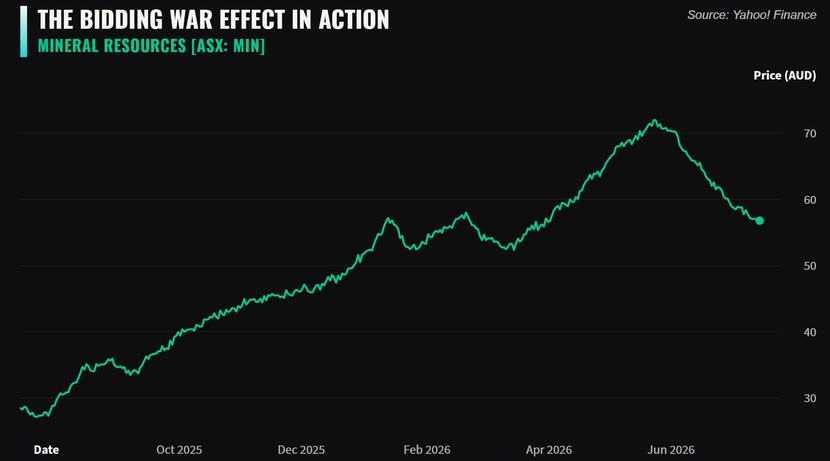
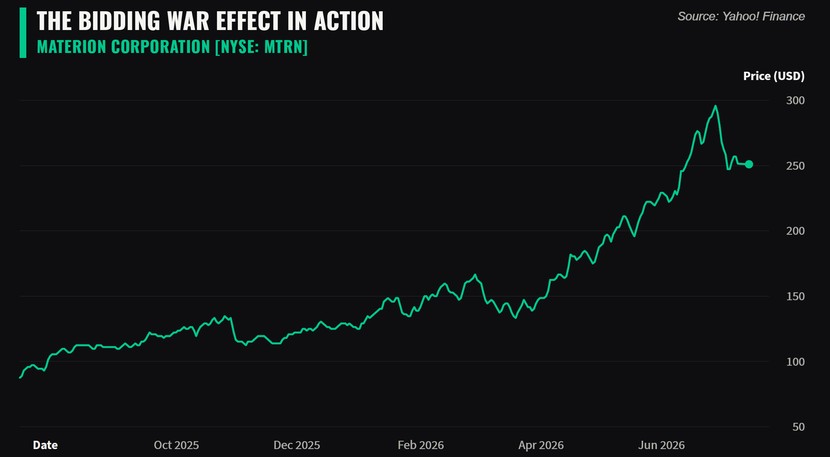
Now, from a distance, moves like these might look like a boom. A megatrend. Or maybe even a bubble.
They’re not.
What you’re looking at is something far rarer. A genuine bidding war — the kind of aggressive market auction we’ve seen on this scale three times in the last 125 years.
On one side of the table: China.
On the other: America.
And crowding in around them, Elon Musk and a handful of the wealthiest companies in history. Giants like Amazon, Microsoft, Meta and Alphabet.
All bidding for the same handful of AI-critical resources.
As you’re about to see, we’ve seen prices run wild when these same forces have been in play before — with investors positioned early doing fantastically well.
And in THIS bidding war,
‘early’ means NOW.
To help you make the most of this rare set-up, we’ve got the perfect man for the job.
James Cooper spent 20 years as an exploration geologist with boots on the ground.
He’s seen how these mining firms operate from the inside. From tiny explorers you’ve never heard of…to Barrick Gold, the biggest name in the industry.
These days, he puts that vast experience to work here at Fat Tail Investment Research, for everyday Australian investors — and over the last four years his readers have had the opportunity to bank some extraordinary gains from his work…
- Fireweed Metals: +239%
- Southern Cross: +175%
- Sovereign Metals: +67%
- Kodiak Gas Services: +104%
- Power Minerals: +43%
From the get-go, I want you to know that not every stock James recommends surges into profit. And that this is a corner of the market that can be high risk.
What we’re looking at here is the extreme potential when things go right — because the trade-off for that high risk can be outrageous.
That’s why James has dedicated his career to understanding everything he can about small miners that could be on the cusp of a dramatic move.
And right now, he believes the window to get positioned in this bidding war is measured in months, not years — because there are five converging forces, all arriving in 2027, that could ignite the stocks at the heart of this $5 trillion story.
In fact, James describes what’s unfolding right now as — and I quote…
‘A moment I’ve waited my whole
career for...a war for the resources
critical to the greatest technology
ever created...and an opportunity
Australian investors shouldn’t let
pass them by.’
Strong words. Let’s see if he can back them up.
James — great to have you here, mate.
JAMES COOPER:
Great to be here, Woody. And look — I stand by every word of that. Twenty years in this industry teaches you not to talk like this. So when I do...it’s because I’ve never been more certain about anything in my career.
WOODY
Well, that’s exactly where I want to start. Because you’ve used a very specific word for what’s happening — and it’s a big word.
War.
Not a boom. Not a trend. A war.
Now, some people watching will think that’s just hype. So make your case. Why call this a war?
JAMES:
Because of what’s at stake, Woody — and how the two sides are behaving.
Every major technology we’ve ever seen — the steam engine, electricity, the internet — the country that got there first gained a nice head start. A big one, sure. But the others caught up.
They always catch up.
For example, Britain and America had electricity in their cities by the early 1900s.
It took most of the world the better part of a century to catch up — but catch up they did.
Today the lights work in Lagos just like they work in London. Same with the internet.
The West got connected in the late 90s. Within about a decade, the rest of the world followed. Today you’ll get the same Wi-Fi in New Delhi as you will in New York.
But AI is different. Very different.
WOODY
How so?
JAMES:
Whoever dominates AI first doesn’t just get a head start. They gain something that makes them harder to catch every single day.
Intelligence itself — the thing that boosts the economy, the industrial base, the military — imagine that replicated at scale, and compounding.
Because AI progress moves at an exponential rate. So if you race ahead, you stay ahead forever.
That’s never existed before.
So this isn’t a race where the loser gets silver.
Whoever wins gains a permanent economic and military advantage. And both Washington and Beijing know it.
WOODY
And it’s not just you saying that, is it? Because the people whose job it is to think about all this stuff, they’re using language we’ve honestly never seen outside of wartime.
Here’s the former US Secretary of Defense, Mark Esper:
‘Whichever nation harnesses AI first will have a decisive advantage on the battlefield for many, many years.’
That’s not an analyst talking his book. That’s the man who ran the Pentagon.
And he’s not alone...
The Center for Strategic and International Studies — one of the most respected defence think tanks in Washington — says:
‘The future of deterrence won’t be decided by tanks or troops alone — but by tiny, rare earth elements that power AI, drones, and defense systems. The United States’ strategic edge depends on securing what’s buried beneath the surface.’
And the Council on Foreign Relations task force, chaired by the CEO of Lockheed Martin...they’re all saying versions of the same thing: this is a contest America ‘can and must win’.
JAMES:
And Woody, when the stakes are winner-takes-all like this...nations start behaving like combatants, not allies.
WOODY
What do you mean by that?
JAMES:
Think about what you do in an actual war. You don’t shop around for the best price on steel. You secure it at all costs.
You outbid your enemy for it. You pay whatever it takes — because losing access costs infinitely more than overpaying.
That’s the behaviour we’re now watching, in broad daylight.
Look at what’s already happening.
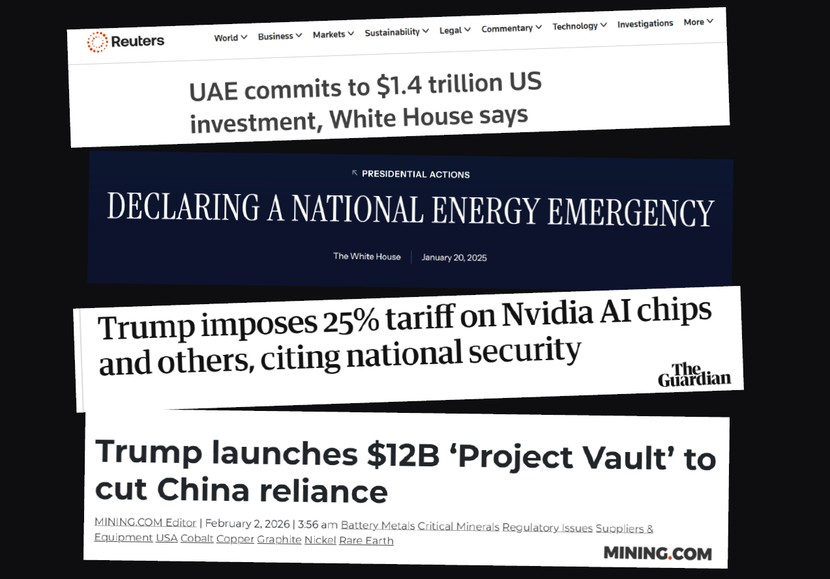
Trillion-dollar tech deals.
Executive orders flying out of the White House.
Tariffs.
The $12 billion critical minerals stockpile announcement.
The race to lock in supply before someone else does.
And then there’s the other side of it — the part most people miss.
China controls the chokepoints.
It can squeeze exports.
It can delay licences.
It can force buyers to scramble for alternatives.
That’s not normal trade. That’s LEVERAGE.
WOODY
And Australia’s in the middle of it?
JAMES:
Exactly. That’s why this is especially important right here.
The United States and Australia are now working under a framework to secure supply of mining and processing for critical minerals and rare earths.
That tells you everything.
This isn’t just about
markets anymore.
It’s about allies securing
a supply
chain that can
survive a fight.
We’ve even seen the Pentagon writing billion-dollar cheques for stakes in mining companies — which, by the way, is unprecedented in peacetime.
WOODY
That’s America… What about on the other side?
JAMES:
It’s the same story...
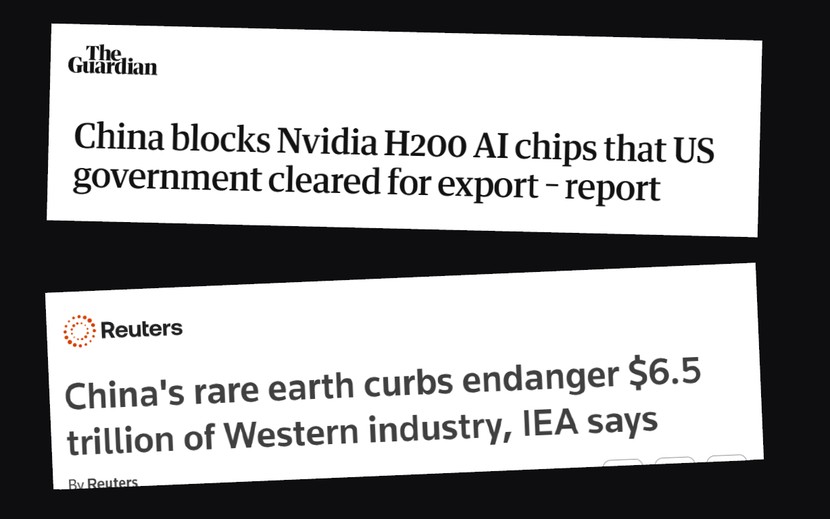
We’ve seen China ramp up export controls…
And seize control of processing chokepoints — forcing other nations to diversify and secure their own scant resources.
To most people, all of this looks like chaos. Just random headlines.
But it’s not random. It’s an arms race to gain AI supremacy.
What we’re watching is the biggest mobilisation of capital and resources ever seen in peacetime.
Government and private industry moving in lockstep — on both sides of the Pacific — the way they last did in the 1940s.
Except this time, nobody’s building Sherman tanks or fighter planes.
WOODY
So if this is a war...what exactly are they fighting over? Because I think most people watching would say chips. Or data centres. Or the smartest AI model.
JAMES:
That’s what everyone thinks. It’s what the media talks about all the time.
They make a big drama of a new China model like DeepSeek being better than ChatGPT — or whatever.
But that’s the single biggest misconception in this entire story.
Both sides have the money — trillions of it, more than they can spend. Both sides have the code — some of the smartest engineers alive, in Silicon Valley and in Shenzhen.
What neither side can conjure up...is the physical stuff the whole thing is built from.
You cannot code a copper deposit into existence.
You can’t venture-fund a rare earth refinery that takes a decade to build.
There’s no executive order on Earth that makes a mine magically appear.
To win this war, both superpowers have to build faster than they’ve ever built — the data centres, the chips, the robots, the energy grid.
And right now? They can’t. It’s as simple as that.
Not for want of capital. Not for want of smart engineers.
For want of ROCKS.
WOODY
And that — right there — is where this tech story turns into an investment story. A bidding war.
JAMES:
Absolutely. It’s where the whole thing becomes an auction. And I can show you the exact moment the bidding ignited…
Now, let me take you back to December 2024, Woody. That’s when the bidding war really escalated…
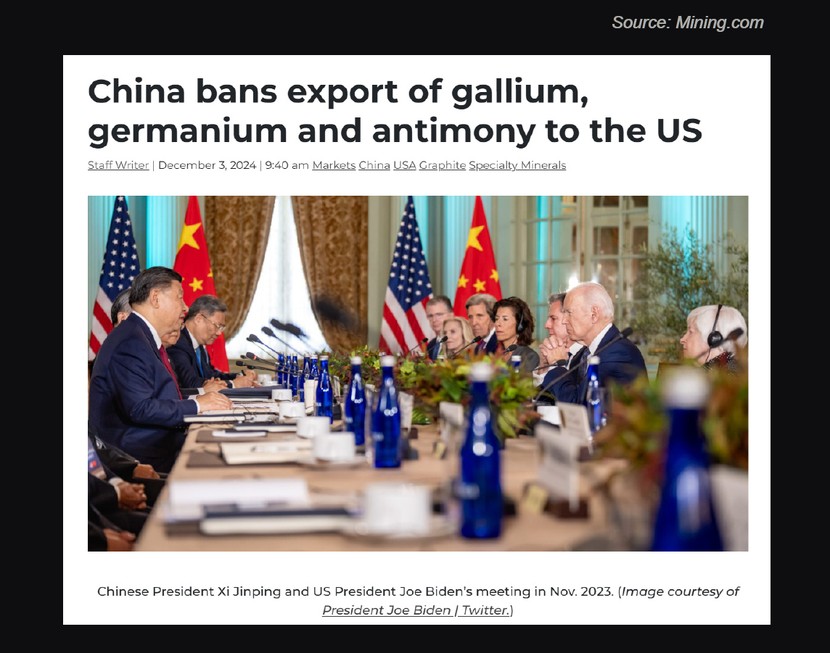
Beijing announced it was banning exports of three metals to the United States.
Antimony. Gallium. Germanium.
Now, most people have never heard of these substances. They’ll go their whole lives without seeing what they look like.
But they’re essential — for semiconductors, defence systems, AI hardware, you name it.
WOODY
And what was the effect of those export bans?
JAMES:
It was immediate…and brutal. Antimony shipments from China to America collapsed 97%. The price more than tripled — smashing through its all-time high.
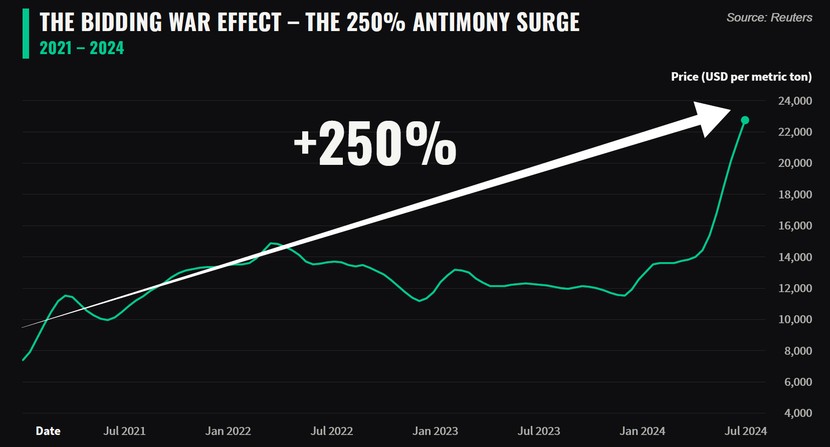
That’s just one export ban of one obscure metal. And the price shot up 250% in a year.
And Beijing was just getting started. In April 2025, they added seven more rare earths to the export control list.
WOODY
Hang on. Rare earths...that’s the move that stopped Optimus.
JAMES:
The very same. That 3.5-kilogram lump you showed at the start of the broadcast…
Beijing’s April export controls are the reason Elon Musk couldn’t get it.
The message to Washington was unmistakable: We control the bottom of your supply chain. And we’re prepared to squeeze it.
WOODY
So what did Washington do?
JAMES:
Something that is unprecedented in modern history.
In July 2025, the Pentagon bought $400 million of stock in a rare earths miner — MP Materials — and became the company’s largest shareholder.
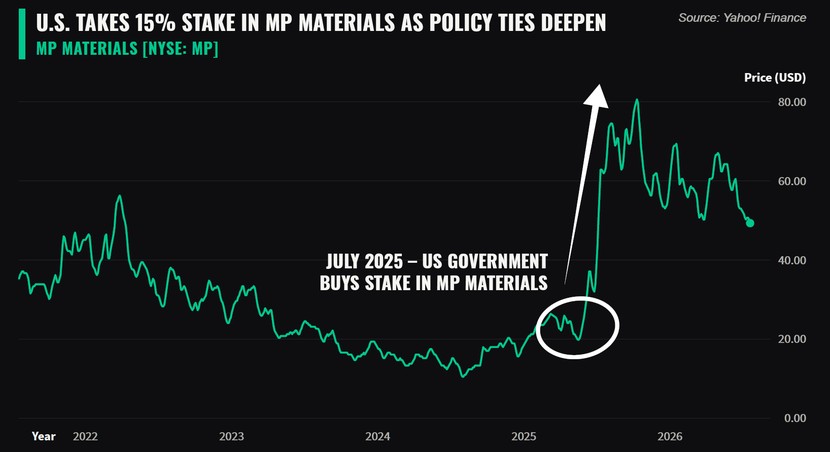
The Pentagon guaranteed MP a price floor of $110 a kilogram for its key rare earth product...
...roughly double the market price at the time. For 10 years.
Think about that. The United States government looked at the market price for a critical AI resource...and volunteered to pay twice as much — for a decade — just to lock up supply.
That is not how buyers behave.
That is how BIDDERS behave.
Bidders who want to win at all costs.
WOODY
And it wasn’t a one-off, was it?
We’ve seen a barrage of announcements to that effect.
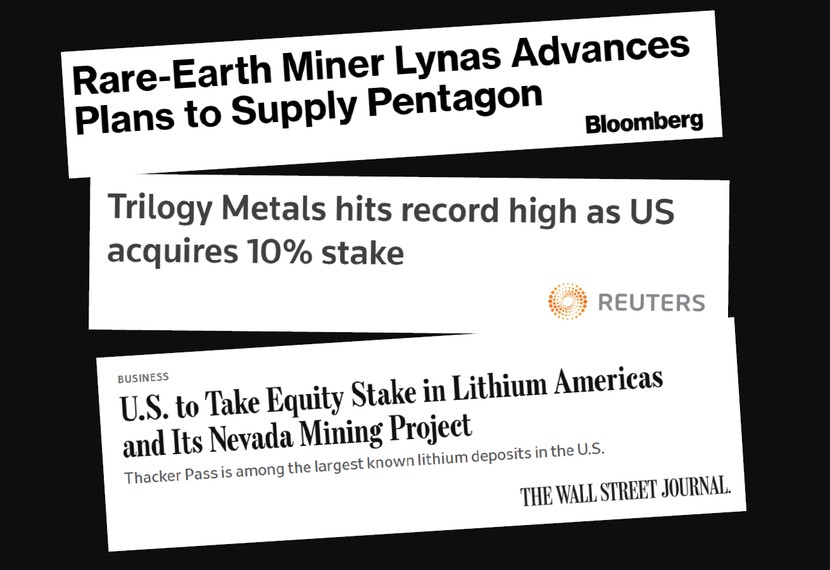
The Pentagon committing $258 million to Lynas — an Australian company — for a Texas processing plant...
Washington taking stakes in Trilogy Metals...then Lithium Americas...
A Trump administration official telling CNBC they’re — quote — ‘not ruling out other deals with equity stakes or price floors’...
Copper, silver and uranium added to the official critical minerals list...
We’ve also got the $12 billion strategic stockpile of strategic materials — Project Vault.
And the government has even taken a direct stake in AI chipmaker Intel, worth almost $10 billion.
It clicks a lot of strange headlines into place, doesn’t it?
The obsession with Greenland — which holds some of the largest rare earth element deposits in the world.
The talk about annexing Canada — one of the world’s most resource-rich nations.
Trump strong-arming Zelensky into that enormous mineral rights deal.
JAMES:
None of it is random, Woody. Once you understand the bidding war, everything Washington does starts to make sense.
Even the tech giants have joined in — Microsoft, Amazon, Google and Meta have contracted more than 10 gigawatts of nuclear power capacity just to feed their AI servers.
Microsoft is literally restarting Three Mile Island.
When companies start reopening mothballed nuclear plants...you know the scramble for supply is real.
WOODY
Now James, you’ve studied resource history your whole career. Has anything like this happened before — governments outbidding each other for raw materials?
JAMES:
Very rarely — and if you know your history (and your resources cycles!), you get a good idea of what could happen next.
In World War Two, the Allies and the Axis fought a bidding war for strategic metals — tungsten, chromite — racing to lock up supply from neutral countries before the other side could.
Bolivia supplied tin for military machinery, while Chile provided massive amounts of copper to the US war effort. Axis powers, recognising this critical dependency, launched espionage and sabotage campaigns (Operation Bolívar) to try and disrupt production.
Spain’s tungsten exports rose more than 200-fold in three years as both sides bid the price into the stratosphere.
Historians have a name for it: preclusive purchasing. Buying something not just because you need it — but so your enemy can’t have it.
It’s the wartime template for exactly what the Pentagon is doing today.
And here’s the irony, Woody.
To beat the heavily controlled command economy in China...Washington is now running one.
Equity stakes. Price floors. State stockpiles. Direct deals with the likes of Nvidia, Palantir and OpenAI.
America is out-China-ing China!
WOODY
Which brings us to the part that matters most for everyone watching. Because when the two richest buyers on Earth start bidding against each other...somebody is on the receiving end of all that money.
JAMES:
Exactly right. And this is the whole point of today, so let me say it plainly…
In a bidding war, the money lands on the companies that own the supply. The miners. The refiners. The energy producers.
And it’s already landing. Look at this band of stocks at the frontier of this story — just over the last 12 months:
- Faraday Copper — up 499%
- Hot Chili — an ASX copper play — up 230%
- Mineral Resources — up 190%
- Liontown Resources — lithium — up 146%
- Materion Corp — beryllium and gallium — up 195%
- Kodiak Gas Services — up 111%...because energy is part of this resource
war too
Every data centre draws tremendous power. By 2030, they could consume as much as 17% of ALL American electricity — four times their share today.
So there is a critical need to supplement the power grid. So much so, President Trump declared it a ‘national emergency’.
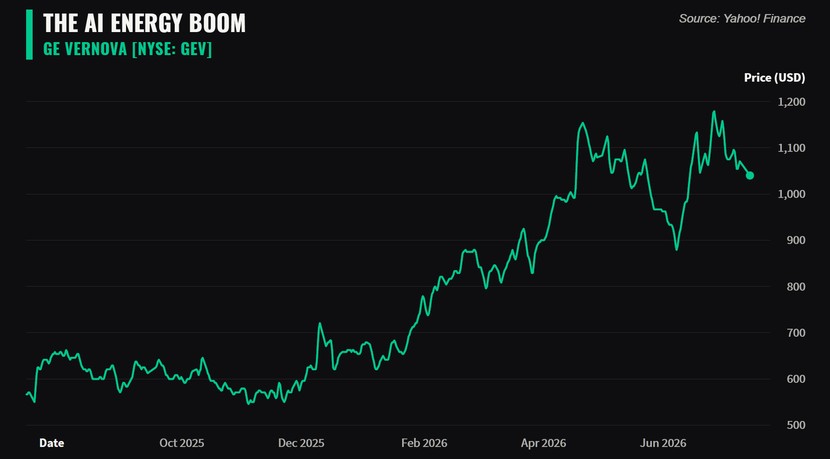
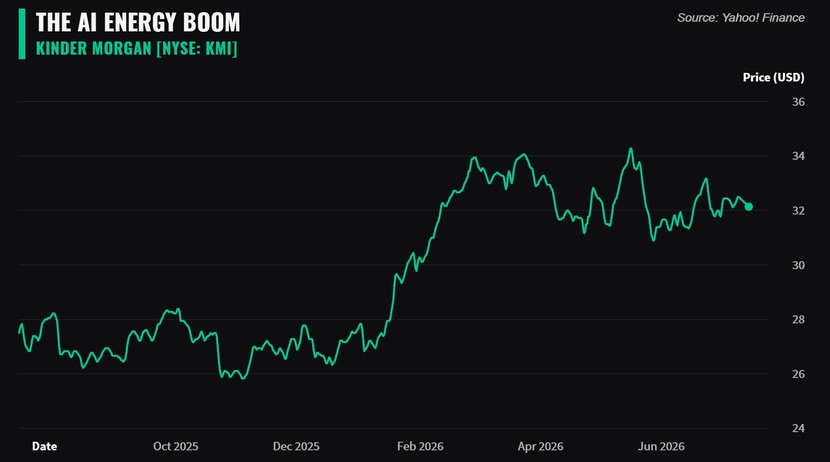
That’s why stocks like GE Vernova…
Kinder Morgan…
And Dominion Energy…
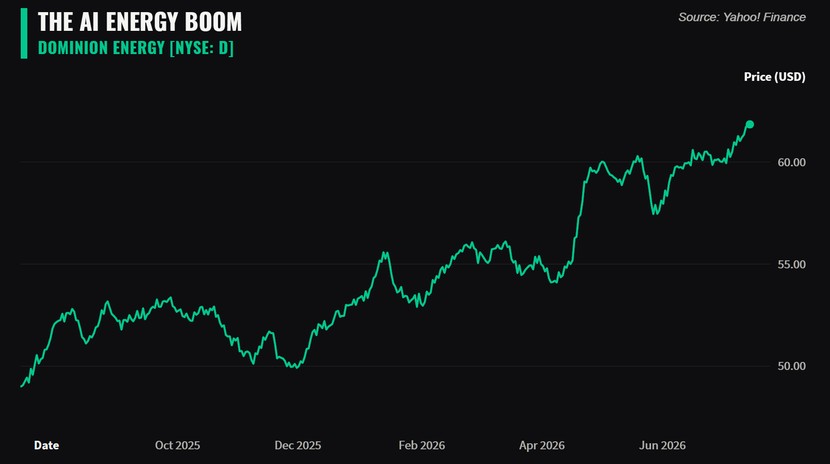
…the companies keeping the lights on…they’re doing fantastically well too.
And we can look at Lynas Rare Earths — the Australian company the Pentagon just wrote a cheque to — up 116%.
WOODY
Copper...lithium...rare earths...gas... These aren’t isolated moves in one hot sector, are they?
JAMES:
That’s what I need people to understand.
This is the bid-up appearing in the prices. Different metals, different countries, different exchanges — one common force underneath all of it.
Two superpowers, the richest companies in history, all bidding for the same narrow band of resources.
And Woody — here’s the thing. These early moves? They’re happening while supply still looks okay.
What happens to those prices when the world figures out that more supply isn’t coming any time soon?
I believe we’re going to see a huge acceleration of these forces.
WOODY
So James, let’s talk about that supply picture. Because I think most people assume that when prices rise, the miners just...dig more. Problem solves itself.
JAMES:
That’s how every normal market works, Woody. Price goes up, supply responds, price settles down.
This market is not normal, in that sense. And to see why, you first need to grasp the sheer scale of what’s being demanded.
Right now, there are more than 1,500 new data centres in the pipeline in the United States alone. China is spending US$250 billion on its own buildout.
And here’s what that means physically: a single hyperscale AI data centre can swallow up to 50,000 tonnes of copper. That’s more than some entire countries use in a year — for ONE facility.
Then you’ve got the chips inside them. A single Nvidia AI chip contains dozens of different elements from the periodic table — tantalum, cobalt, gallium, silicon, nickel. And a single AI cluster holds tens of thousands of those chips.
Then the foundries that make them — Musk’s Terafab in Texas is a $55 project on its own, three times the size of Central Park.
When production begins, it’ll consume gallium, germanium, silicon and tantalum by the tonne.
And the robots. Elon says he wants to build Optimus by the million. Even if he is exaggerating by a factor of 10, we’d still be talking about one of the biggest industrial projects in history. And every single one needs three and a half kilos of rare earth magnets.
And he’s just one player. There are companies…like Figure, Boston Dynamics, and Chinese makers like Unitree — they’ve all got a huge robotics pipeline.
WOODY
And then there’s the power to run it all.
JAMES:
Absolutely, we just touched on that…
Microsoft, Amazon, Google and Meta have signed contracts for more than 10 gigawatts of nuclear capacity just to feed their AI servers — and uranium prices have tripled in three years.
And Goldman Sachs estimates the electricity demands of AI will drive $720 billion in new grid spending alone...practically every kilometre of it strung with copper.
WOODY
So every layer of this buildout — the data centres, the chips, the foundries, the robots, the power…
JAMES:
…every layer draws on the same narrow band of materials.
Copper. Rare earths. Uranium. Gallium. Tantalum. Different technologies, one shopping list.
WOODY
The demand side is genuinely hard to get your head around. One thing really stuck with me while researching this…
OpenAI’s own chief financial officer has said the company has seen an almost one-for-one relationship between compute and revenue.
In fact, she revealed that OpenAI is now turning down opportunities because it simply doesn’t have enough computing capacity.
They actually killed Sora — their flagship video product — because they didn’t have the hardware to run it alongside ChatGPT.
The most valuable AI company on Earth...sacrificing products...because it can’t get enough physical hardware.
JAMES:
And Woody, that’s demand. Now hold that picture in your head...while we look at supply.
According to S&P Global, the average mine now takes 17.9 years to go from discovery to production.
Nearly 18 years. In the United States, it’s worse — 29 years. Second-slowest in the world.
WOODY
Three decades just to open one mine. It’s incredible.
JAMES:
And the pipeline behind those timelines is nearly empty. Of 239 major discoveries since 1990, only 15 have reached the construction stage and begun development.
The rest are still sitting in the ground, stuck in feasibility studies, permitting, and litigation.
Ore grades have fallen by around 40% since 1991. The easy deposits are gone. What’s left is deeper, more remote, more expensive.
Chile — the largest copper producer on Earth — still leans on mines discovered more than a century ago.
Most of their operations are decades old. In fact, one of them has been running from before the first Model T rolled out of Henry Ford’s factory.
The cost of starting a new mine is now so brutal...that some of these operations are literally feeding old waste rock back through the mills, just to keep production moving.
The world’s number one copper supplier...is re-mining its own rubbish!
WOODY
That’s extraordinary.
JAMES:
And it’s everywhere you look.
Kazatomprom — the world’s biggest uranium producer — slashed its own output targets by up to 17%, blaming a shortage of sulphuric acid and construction delays.
Cameco, the second biggest, missed its targets too. Between them they supply a third of the world’s uranium.
Japan is drilling six kilometres beneath the Pacific Ocean, pulling up rare-earth mud from the seabed.
Woody, when a G7 nation starts mining the bottom of the ocean, at eye-watering cost, that is not a market in balance. That is desperation. Wartime behaviour!
WOODY
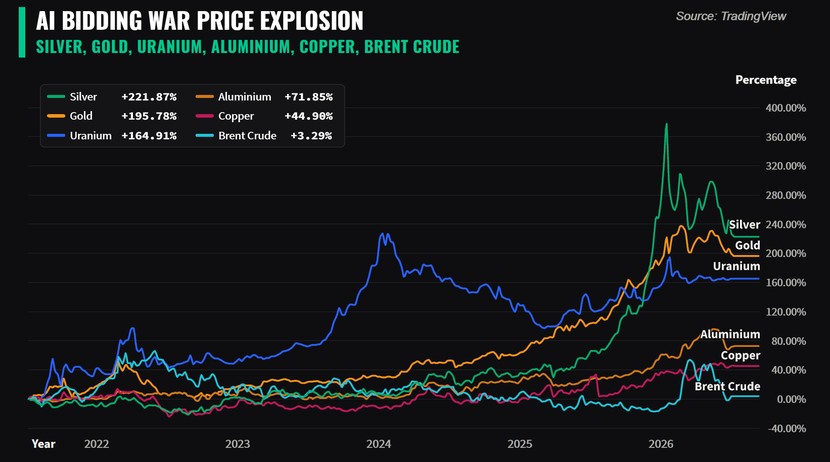
And you can see that desperation in the prices, can’t you — right across the board:
JAMES:
Of course. It’s the oldest law of economics. Practically every AI-critical material is telling the same story. And it comes down to one simple asymmetry.
Silicon Valley moves at the speed of light. The real world moves at the speed of a 700-tonne Caterpillar digger.
Demand moves at the speed of an earnings call. Supply moves at the speed of a permitting office.
And that gap cannot be coded away. It can’t be venture-funded away. It can’t even be Pentagon-chequed away.
It can only be bid away — with higher and higher prices for the resources, and the mining and refining companies that sit at the heart of it all.
That’s why I call them the supply kings. Because they’re beginning to rule the market.
WOODY
So the demand is outrageous...the supply is frozen for a decade or more...and the world’s most powerful buyers have unlimited cheque books.
James, in all my years around markets I don’t think I’ve seen a set-up where the arrows all point one way like this.
JAMES:
That’s what makes THIS moment so rare, Woody.
Markets almost never speak clearly. There’s always a load of noise, always doubt about where capital is migrating.
Not here. This is a market being held to ransom by physics and geology — and it is telling investors, in plain language, exactly where to stake their capital.
Not the AI apps. Not the chatbots that will come and go. Not the model-of-the-month.
The supply kings. The companies that own the rocks, refine the rocks, and power the machines.
The market itself is pointing at them — with more conviction than I’ve seen in 20 years of doing this.
Think about everything we genuinely can’t know in this story, Woody.
We can’t know which AI app wins. We can’t know which model comes out on top — whether it’s OpenAI, Google, Meta, or some Chinese lab nobody’s heard of yet.
We can’t know how long these companies can keep spending hundreds of billions without facing the consequences.
We can’t even know whether America OR China ultimately prevails.
But here’s what we CAN know — with near-total certainty.
Every single one of them — every lab, every hyperscaler, every superpower — needs the same materials. Copper. Rare earths. Uranium. Gallium.
There is no version of the AI future that doesn’t run through them.
And that means the companies that mine them, refine them and supply them don’t have to pick the winner...
They get paid by everyone in the race.
WOODY
The picks-and-shovels play. Whoever finds the gold, the bloke selling shovels does alright.
JAMES:
Exactly — except this time the shovel-sellers have TWO superpowers and the richest companies in history queuing at the counter.
These stocks are sitting like tollbooths on the most lucrative trade routes in history.
A thousand years ago, the great fortunes weren’t made by the merchants gambling on which silk would sell in Venice. They were made by whoever controlled the mountain passes the Silk Road ran through.
Every caravan paid. Didn’t matter whose goods were on the camels.
Well, this is the Silicon Road. Trillions of dollars, all of it forced to travel through the same narrow band of physical materials. And the companies that own those chokepoints collect...no matter who wins the war.
WOODY
Now, I know our legal team would want me to jump in here — nothing in markets is guaranteed, and mining stocks carry real risk.
But what you’re describing is unusual, isn’t it? A situation where you can invest with a great sense of conviction in the best placed companies — without having to predict the future.
JAMES:
That’s exactly the point, Woody. I’m not claiming certainty — no honest analyst ever can.
Many of these companies will stumble. But the restrictions here — of supply, of the time it takes for the erupting demand to be met by supply — in my opinion they stack the odds in the favour of the investor.
And it’s not theory. We’ve been positioned in this space for a while now — and it’s already paying.
Inside my portfolio we’ve already banked wins like 239% on Fireweed Metals...
114% on Southern Cross... 67% on Sovereign Metals... 43% on Power Minerals.
And we’re sitting on some open positions right now that are well into triple digits, too…
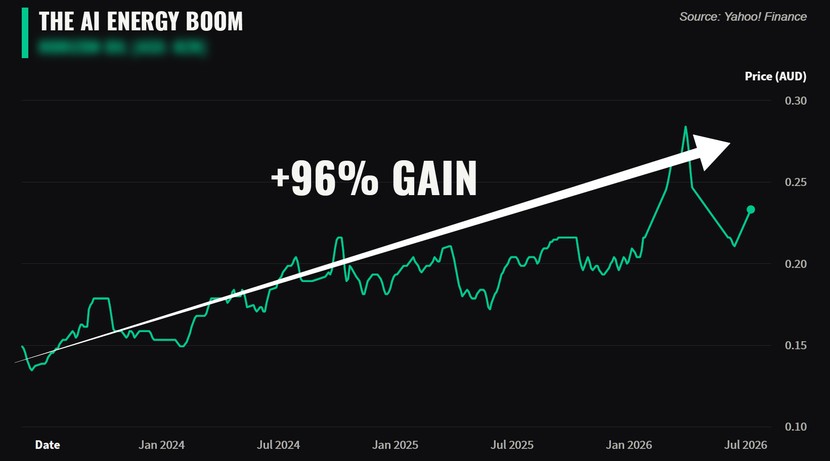
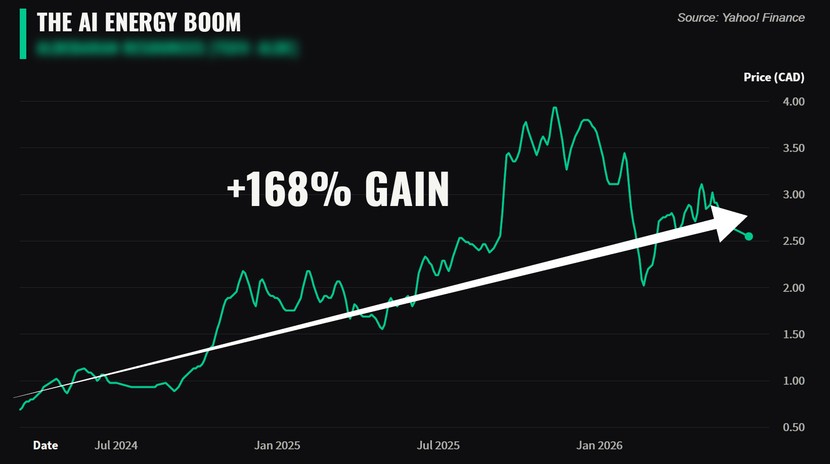
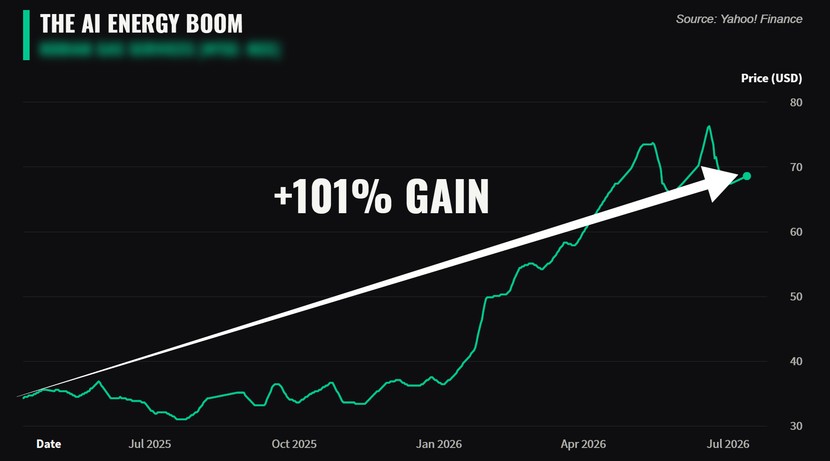
Of course, Woody, I don’t want to give the impression we only pick winners.
We’re talking about a speculative seam of stocks here. And I specifically target early-stage opportunities because they typically carry the most potential for extreme upside (when you get it right).
But we’ll get a bloody nose from time to time — even when it looks like everything has aligned in our favour.
That’s the trade-off here — extreme potential comes with higher risk.
That’s why I always advise modest stakes you can afford to lose. That’s the way to expose yourself to the potential, without biting off more than you can chew.
WOODY
The thesis seems to be already working — we’ve seen that, and the subscribers are seeing that pay off.
But James, you’ve said something to me before that I want you to expand on.
You said: We’re not guessing here, because we’ve seen this before.
JAMES:
We have. Three times in the last 125 years. And while the past can’t tell us exactly how events will play out, it can show us patterns.
And when the same set-up produces the same result, three times out of three, across completely different eras and completely different materials...you’d be a fool not to learn the lesson it’s teaching.
WOODY
So take us through them.
JAMES:
The first one, we’ve already touched on. In World War Two, the Allies and the Axis fought a secret bidding war for strategic metals — things like tungsten and chromite — racing to lock up supply from neutral countries before the other side could.
We touched on it earlier: economic historians call it preclusive purchasing. Spain’s tungsten export revenues rose more than 200-fold in three years.
Prices went vertical — because when nations bid for survival, price stops mattering.
The second major resource bidding war unfolded in the 1970s.
OPEC seizes pricing power, and suddenly the US, Europe, Japan and the Soviet bloc are all bidding against each other for energy security.
The picks-and-shovels of that crisis — the oil services companies — became the trade of the decade. Schlumberger rose 50-fold from its listing to its 1980 peak.
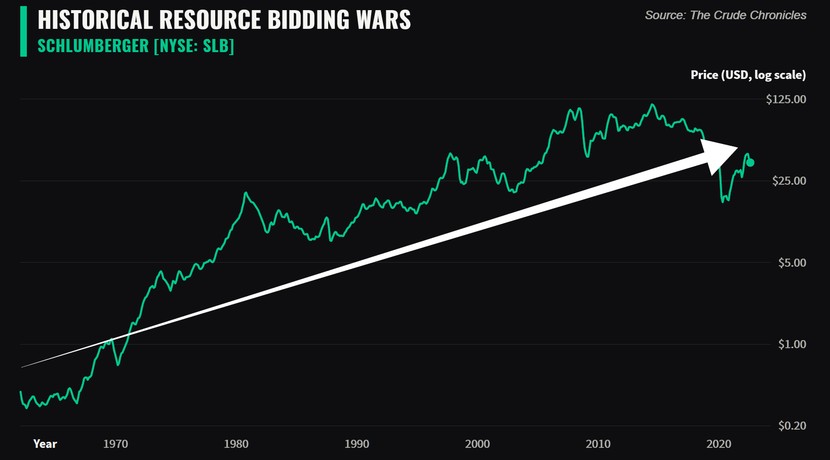
An investor who bought in 1971 compounded at 37% a year for nine straight years.
The third bidding war was the China supercycle from 2002 to 2011.
China bids Western and Japanese industrial buyers off the table for the rocks it needs to industrialise. Iron ore goes from around $20 a tonne...to $187. BHP, Rio and Vale deliver some of the biggest mining profits in history.
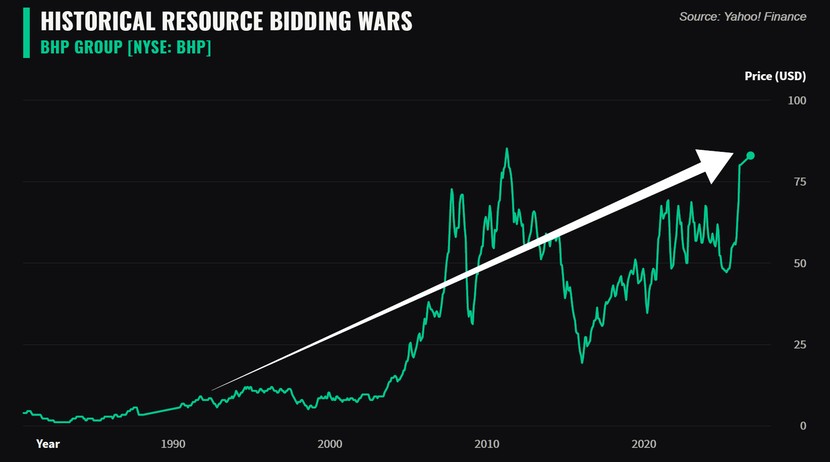
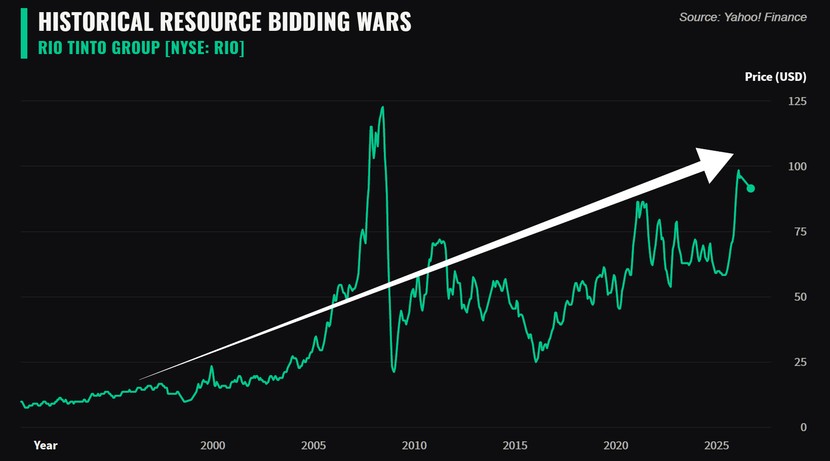
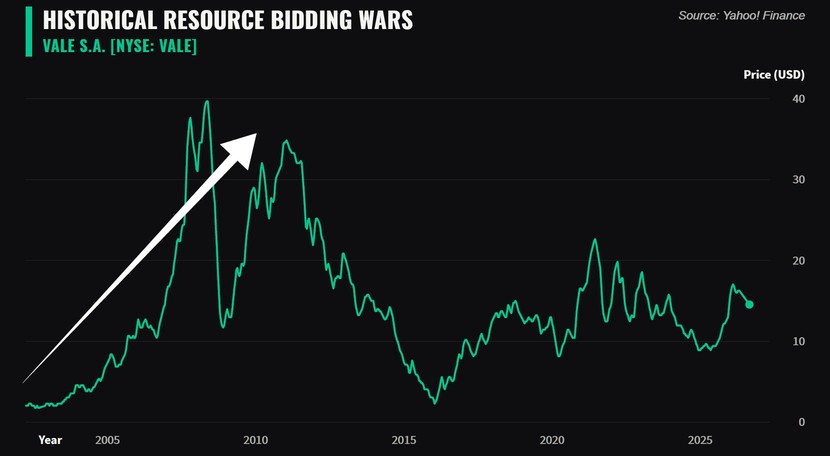
And Fortescue goes from a struggling explorer to one of the largest iron ore producers on Earth…
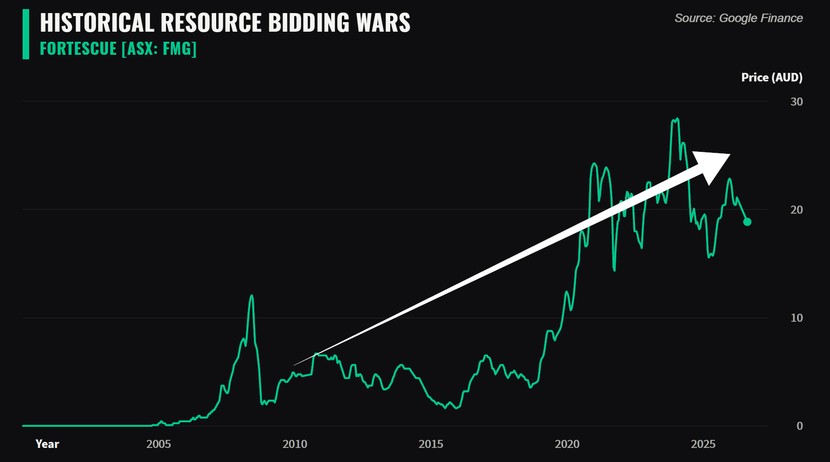
Australian investors who were positioned early did extremely well out of that one.
WOODY
That’s three bidding wars. Across three different eras. Centred on three very different sets of materials…
JAMES:
…but one very similar result, every time.
When powerful buyers are forced to bid against each other for finite supply...the bidding has a catalytic impact on the price of the resources being fought over…
Naturally…this can give a huge boost to the COMPANIES helping to facilitate this.
It’s these opportunities that are at the frontier of the story for you as an investor.
History shows the moves we are talking about are not just a gentle rise — they can be an eruption.
That’s the pattern. That’s the lesson history keeps teaching.
And Woody, I believe a fourth bidding war has just begun.
WOODY
Okay. Let’s just take a quick breather here — because we’ve covered a lot of ground, and I want to make sure you’ve got the full picture clear in your mind.
Here’s what you now know.
The two most powerful nations on Earth — along with the richest companies in history — are openly bidding against each other...for the same narrow band of physical resources. The copper, the rare earths, the uranium that every piece of the AI future is built from.
You know the demand for those materials is exploding. Data centres by the hundred. Robots by the hundreds of thousands. Chips by the tens of million.
And you know the supply simply cannot respond. Not this year. Not next year. In some cases, not for decades.
When unstoppable demand
meets immovable supply...
prices get bid up. Violently.
Now, here’s what’s still to come. And honestly, this is where it gets really interesting.
In a few minutes, James is going to show you the five forces all converging in 2027...that could act like an accelerant to this story like fuel to the fire — and potentially turn this bid-up into a public frenzy.
He’s going to reveal the other bidders in this auction — the ones almost nobody is really talking about yet.
And of course, as promised, James is going to share his #1 move to make today — one investment sitting directly in the path of everything you’ve just seen. That’s coming, and it’s worth the wait.
Plus — for those of you who want to go deeper — James is going to share details on his five highest-conviction stocks right now, sitting right at the heart of this super bid-up. These are the stocks he believes are best placed to climb as the AI resource war intensifies.
All of that is to come. So stay with us.
WOODY
James, I wanted to address something that the people watching might be thinking right now. Namely, that AI is overhyped. The capex is insane. The valuations are insane.
We’ve seen tech manias before, and they end in tears.
What do you say to that?
JAMES:
I say...you’re partly right.
A lot of these AI bets will fail, for sure. Some of the money being spent right now will be lit on fire. That’s what happens in every technology revolution.
Think back to 1999.
The internet was real, but most dot-com companies were made of thin air.
The crash wiped thousands of them out. And yet out of that wreckage came a handful of companies — Amazon, Google and Apple — that went on to dominate the world for 25 years (and still are).
The bubble popped. The technology didn’t.
WOODY
So, even if the sceptics are right about the bubble and froth…
JAMES:
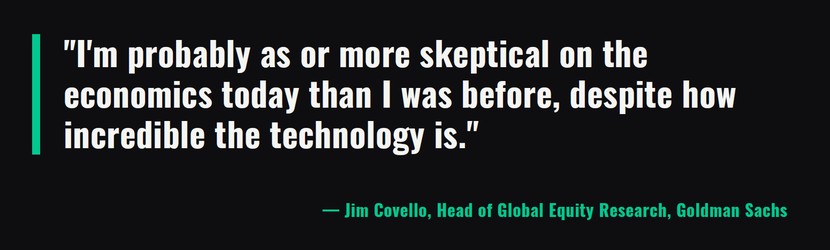
…and you don’t have to take my word for it. Listen to the biggest AI sceptic in institutional finance — Jim Covello, Goldman Sachs’ own head of global equity research. The man who has spent four years arguing this spending may never pay off:
Meanwhile Goldman’s own institute now projects $7.6 trillion of AI capex between 2026 and 2031:
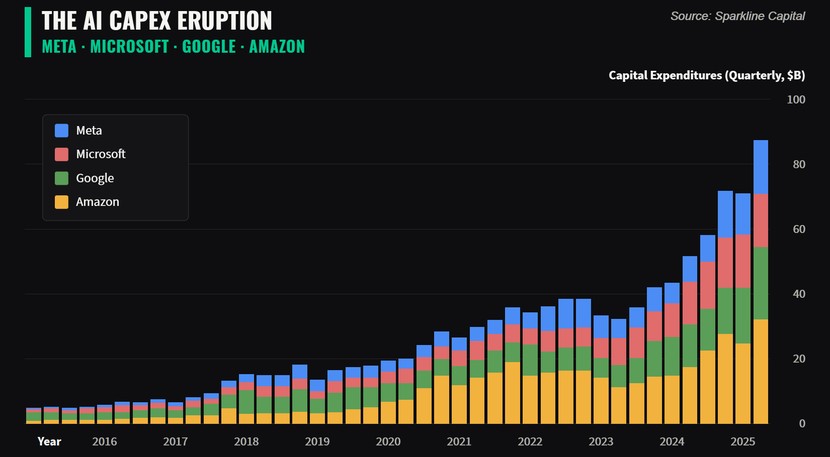
The sceptic thinks it’s madness. And the money is coming anyway.
Look at this:
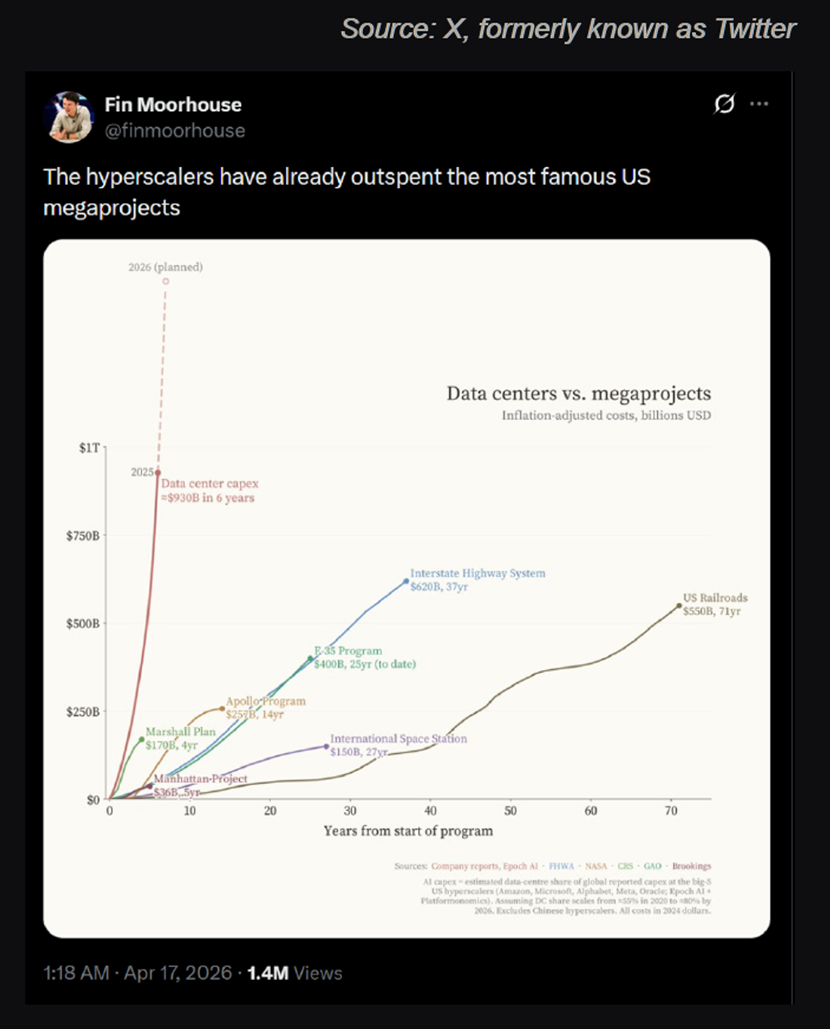
The physical infrastructure going into the ground right now already exceeds the great American railway buildout... It dwarfs the construction phase of the internet...and it’s still ramping.
We are past the point of no return. This is happening — with you or without you.
You can be a witness to history...or you can grab your slice of it.
WOODY
But play devil’s advocate with me, James. Say the sceptics are completely right. Say AI stocks crash the way dot-coms did. What happens to the resource companies you’re talking about?
JAMES:
That’s exactly the right question — and it’s why I’m positioned where I’m positioned.
Think of it like this… When a software company crashes, what’s left? Some code. Some office chairs. A nice coffee machine maybe. When the dot-coms died, their websites were worth nothing.
But copper doesn’t go to zero. Uranium doesn’t go to zero. A world-class ore body is still a world-class ore body the morning after a crash — because the physical world still needs it. For the grid. For defence. For every industry on Earth — AI or no AI.
So look at the two sides of this…
If AI delivers everything the optimists promise — the supply companies win, because the buildout consumes their materials for decades.
And if the sceptics are right and the froth blows off — the materials hold real value in a way software never can.
That’s not a guarantee — mining stocks fall in crashes too, sometimes hard. But it’s why I’d much rather own the rocks than the apps.
WOODY
And there’s one more thing that tells you this trade is early, not late — isn’t there?
JAMES:
The raw numbers, Woody. For all the noise about AI mania...mining makes up around 1% of the S&P 500. Tech is roughly 40%. If this were a bubble in resource stocks, you’d see it in those weightings — and you simply don’t.
The crowd hasn’t arrived yet. Bloomberg reported in January that mining stocks quietly beat the Magnificent Seven over the past year — and still almost nobody’s talking about it.
That’s not what the top of a bubble looks like. That’s what the bottom of a rotation looks like.
We’ve seen the impact this has already had on a handful of stocks critical to the AI buildout…
But in terms of stock price climbs, the real ignition point could be right around the corner.
WOODY
Right, this is something you’re calling the 2027 Collision… Tell us more about that and what it means for the resource stocks involved.
JAMES:
2027 is a really important year — it’s when five forces really start to converge. All at once. On that same narrow band of materials.
ONE: We’re going to see hyperscaler spending blow past $1 trillion a year. The AI buildout becomes bigger than the US railways and the Apollo program — combined. That’s the biggest flood of capital into any industrial project ever — an absolute deluge of cash concentrated on resource-guzzling technologies.
TWO: At least 150 new data centres could come online in a single year — each one swallowing copper by the tens of thousands of tonnes. This is where all that money hits the real world and where a huge amount of AI-critical resources will end up.
THREE: The giant chip foundries switch on. Terafab-class plants, consuming gallium, germanium, silicon and tantalum at industrial scale. As we know, Elon Musk’s facility is leading the way here. It’s the single biggest facility humans have ever built and for one purpose — to centralise the mass production of the AI chips his entire empire runs on.
FOUR: Humanoid robots go into mass production. Tesla. Figure. Unitree. XPeng. An entirely new source of demand for rare earth magnets, copper and batteries that didn’t exist even a few years ago. All of a sudden a whole new industry is demanding unbelievable amounts of these finite resources.
And then…
FIVE: The superpowers escalate. This is all but an inevitability. I predict we’ll see more tariffs. More export bans. More stockpiling. One thing we do know: a hard Pentagon deadline is fast approaching. From January 2027, Chinese rare earth magnets are banned from US defence systems. Full stop.
Any one of those forces would strain global supply. All five, converging in the same 12 months, on materials that take a decade to bring out of the ground...
That’s not a trend, Woody. That’s a collision.
The prices you’ve seen so far? That’s the market moving on what’s already happened. 2027 is when fuel hits the fire.
WOODY
And you’d want to be positioned before the crowd works that out.
JAMES:
That’s the whole game. You’ve GOT to have a stake in the best of these firms. But before we get to which stocks hold the highest potential, there’s one more thing I need to show everyone watching.
Everything I’ve shown you today assumes two bidders. America versus China.
But it’s bigger than that. Far bigger.
Saudi Arabia’s sovereign wealth fund — nearly a trillion dollars under management — built an entire company, Manara Minerals, for one purpose: buying stakes in mines around the world. Its first major deal? $2.5 billion. And late last year, the Saudis signed a rare earth refinery pact with MP Materials and the US Department of War.
The UAE has spent billions buying copper in Zambia and the Congo. Qatar just put half a billion into copper giant Ivanhoe.
Korea has instilled government targets to cut its China dependence — with dozens of minerals designated as strategic priorities.
The EU has written its own supply quotas into law — the Critical Raw Materials Act legally requires Europe to mine 10% of its critical minerals at home and process 40% by 2030.
And what’s going on in Japan directly impacts us over here, Woody… Japan’s state minerals agency has been quietly backing an Australian company — Lynas — since 2011. It saved the company from collapse.
Today, Japan guarantees Lynas a floor price of $110 per kilogram on its rare earths.
$110. The exact same number the Pentagon guaranteed MP Materials.
Two governments. Same metal. Same price floor.
BOTH roughly double the market rate.
This is a global scramble.
WOODY
So it’s not just America versus China at all.
It’s Washington...Beijing...Riyadh...Abu Dhabi...Doha...Seoul...Brussels...Tokyo — plus Musk and the hyperscalers on top.
JAMES:
Yeah…and they are all bidding for the same rocks. And the supply kings are the only ones selling.
WOODY
And a fair chunk of those bids...are landing on Australian assets.
JAMES:
Absolutely. Think about where Australia sits in this war. We’re not a combatant. We’re the armoury.
We hold some of the largest reserves on Earth of the exact materials both sides are bidding for — rare earths, lithium, copper, uranium. It’s already under our soil, under our flag, dug up by companies listed on our exchange.
Australian investors don’t have to chase this story overseas. The bidders come to us.
WOODY
And the bids are already landing, aren’t they?
JAMES:
In black and white. Late last year, Washington and Canberra signed a critical minerals agreement — with stockpile provisions and price supports written into it.
WOODY
Now here’s why I think this matters so much for our viewers, James…and I hear this from readers all the time.
They want exposure to AI. They can see it’s the investment story of the decade. But they feel trapped. These crazy valuations scare them. They’re worried about buying the top of a bubble.
JAMES:
And they’re right to be careful. But this is the point, Woody… Resources are their way in. Real assets. Real revenue. Companies that get paid no matter which AI company wins. No matter which nation ultimately gains AI supremacy.
While American investors chase software trading at a hundred times earnings...Australians can own the PHYSICAL supply the entire race depends on. Often at valuations the AI crowd would kill for.
That’s the edge. Most people watching don’t realise they’re sitting on it.
WOODY
But — and this is the crucial bit — not every Aussie miner is going to come out on top, are they?
JAMES:
No. And this is where the real work starts.
For every company genuinely positioned at a chokepoint of the AI supply chain, there are 10 riding the story with nothing in the ground. I’ve spent 20 years learning to tell the difference — first as a geologist hunting deposits, now hunting stocks.
And the framework I use hasn’t changed. I call it the three Ts.
And the first one is Trends.
The commodity has to sit in the path of unstoppable demand. Not this year’s hot metal — the materials with structural, multi-year forces behind them. That’s exactly what this bidding war gives us: government-guaranteed demand, written into price floors and stockpile agreements.
Next up is Timing.
Resources are cyclical, always have been. The fortunes get made buying quality assets when they’re still unloved, before the crowd arrives. Timing is what separates a good story from a good investment. And as we’ve shown you today...the window we’re in right now is the early one.
Finally, I look at Talent.
This is the one most investors miss completely. In mining, you back people before projects. The industry runs on a small pool of proven operators — geologists and mine-builders who’ve made discoveries before and done it for shareholders, not just for themselves.
When serious money and serious talent move into a small company, that’s my signal to look closer. It’s how the smart money has always played this game.
WOODY
Trends, timing, talent.
JAMES:
Yep. And here’s the thing, Woody… Set-ups where all three line up at once are genuinely rare. I’ve seen it maybe a handful of times in my career.
In this bid-up...I’ve found five companies where all three Ts are flashing green.
WOODY
So that’s the full picture. Now let’s do what we promised at the start of this broadcast — let’s talk stocks and investments… Let’s focus on how our viewers could benefit from this unstoppable bid-up in prices.
JAMES:
Happy to, Woody. And I want to start by honouring that promise we made: to share a move the viewers can make today to help them benefit from this bidding war.
No catch, no strings. Whether they stay with us to the end or not, I want everyone watching to walk away with something they can act on today.
If you want simple, broad exposure to everything we’ve talked about — the whole basket of AI-critical materials — there’s one straightforward way to do it.

I’d look at the Rare Earth and Critical Metals ETF, listed right here on the ASX.
One move. Instant exposure to a spread of the miners and refiners producing rare earths, lithium, copper and the rest of the materials at the centre of this bidding war. You could make that move through any broker, this afternoon, in about 30 seconds.
WOODY
And for someone who wants to be positioned but doesn’t want to pick individual miners, that’s a genuinely sensible starting point.
JAMES:
It is. No guarantees, but if the bid-up plays out the way I expect, investors who simply park themselves in the broad basket now could do very well over the coming years.
But Woody... I have to be honest, an ETF is a blunt instrument. You’re buying everything — the genuine chokepoint companies and the passengers. The winners get diluted by the also-rans.
Think back to those stocks we showed you earlier. Faraday, up 499%. Hot Chili, up 230%. Lynas, up 116%. Materion, up 195% — all within just 12 months.
Those are the kinds of moves this bidding war is capable of producing — and you don’t get them owning the whole haystack.
You get them by owning the needles.
As I explained earlier, these needles carry more risk, but they typically offer higher rewards when they come good.
The individual companies sitting directly on the chokepoints. The ones with the right rocks, at the right time, run by the right people. The supply kings.
And those are the companies I use all my industry experience to uncover.
WOODY
Which brings us — neatly — to the five companies you mentioned. The ones where all three Ts are flashing green.
JAMES:
Righty, let’s get into them...
These aren’t ideas I sketched on a napkin for today’s show.
All five are full, formal recommendations inside my specialist, premium advisory service, Mining: Phase One — researched the way I was trained to research as a working geologist. Drill results. Resource models. Management track records. The lot.
And this is the only way to do it when you are looking at the ‘first phasers’…the early-early-stage explorers.
As you may know, I run a hugely popular advisory called Diggers and Drillers. In there, we focus on the big ASX names. That gives you a taste of the bidding war.
But it DOESN’T put you right in there.
Mining: Phase One deals specifically with the companies right at the bleeding edge of this battle.
Everyone watching should also know that these are speculative, small mining companies. They can be volatile. That’s why we never break the golden rule — only ever invest capital you can afford to lose.
WOODY
Understood. And you should also understand, as far as I’m aware, you won’t find a comparable service.
It is hyper-focused on the FIRST point in a mining company’s lifecycle.
And we’ll expand more on that in a moment.
For now, let’s start with…
SUPPLY KING #1:
TRUMP’S NEXT TARGET
JAMES:
Supply King #1 takes us straight back to where we started this broadcast — that lump of metal Elon Musk couldn’t get his hands on. Rare earths.
These are the materials at the absolute centre of this bidding war — the ones the Pentagon is already paying double for.
Now, here’s the situation in America right now. Washington has bought into MP Materials. It’s bought into USA Rare Earth. Both stocks have made substantial gains since those stakes were taken.
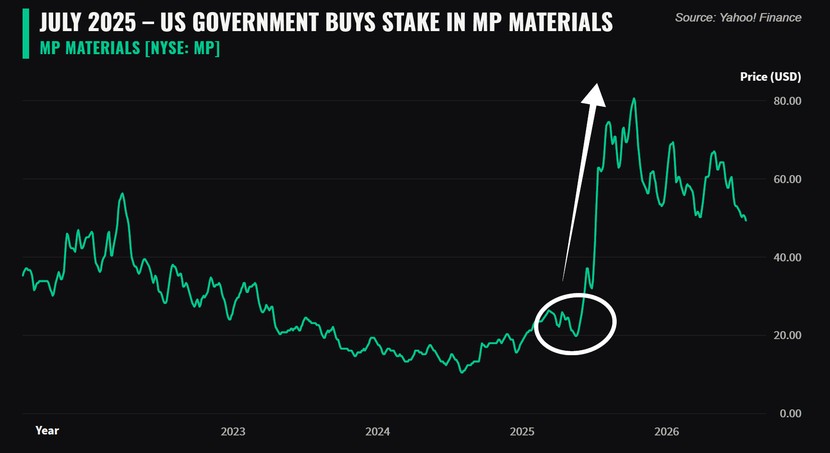
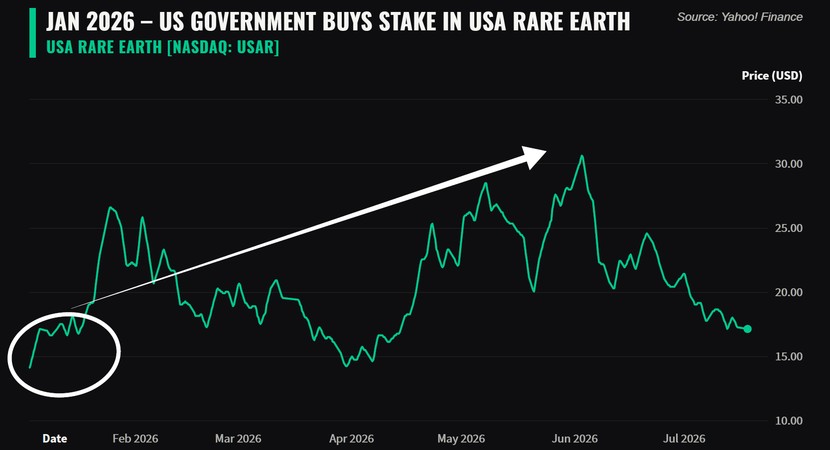
The government is writing cheques and price floors as fast as it can — because it needs domestic rare earth supply, at scale, before that January 2027 deadline locks Chinese magnets out of US defence systems.
So the trillion-dollar question is: Where does the Pentagon’s money land next?
I believe I’ve found the answer.
A company sitting on one of the largest rare earth deposits ever discovered on American soil — billions of tonnes of resource, in one of the most mining-friendly states in the country. A deposit that independent analysis suggests could rival the great Mt Weld mine in Western Australia — the deposit that made Lynas.
Here’s the kicker: it’s not listed in New York. It’s listed right here — on the ASX. An Australian-listed company, holding a strategic American asset, in the exact category Washington is bidding up.
But it’s smart… Right now, this company is filing for a dual listing so it can get on the tech-dominated Nasdaq exchange.
That’ll open it up to a huge pool of buyers across the US. And bring it to the attention of all those tech investors suddenly realising investment in AI starts with the rocks.
Everything we’ve talked about today — the Musk metal, the Pentagon’s cheque book, the Australian advantage — converges on this one stock.
WOODY
Now James, I know that’s just the story in a nutshell. Your full analysis on this company goes much deeper — and gets much more granular.
JAMES:
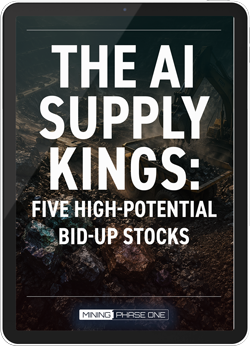 That’s right, Woody. And if we were to cover everything we’d be here for hours. So, I’ve put all of my analysis — on all five companies we’re talking about today — into a major new report we’ve just finished, called:
The AI Supply Kings: Five High-Potential Bid-Up Stocks
Everything’s in there. The full company profiles, the geology, why each one sits at a chokepoint of this bidding war — plus the names, the tickers, the risks involved, and my buy-up-to price on every single one.
WOODY
For everyone watching, we’ll tell you exactly how to get your hands on that report in just a moment. But first, let’s hear about…
SUPPLY KING #2:
THE WONDER METAL
YOU’VE NEVER HEARD OF
JAMES:
Supply King #2 is my favourite kind of story, Woody — the one almost nobody is watching.
Let me ask you something. Have you ever heard of niobium?
WOODY
Honestly? Yes. But only because YOU told me about it.
JAMES:
Haha, fair enough. Well, most people haven’t. And yet without it, there’s no aerospace industry, no advanced steel, no next-generation batteries or superconductors. It’s on every critical minerals list in the Western world.
Now here’s the extraordinary part… Virtually the entire world supply comes from essentially one mine, in Brazil. One single mine. That’s an incredibly lucrative tollbooth on the AI resource highway.
A couple of years ago, a small Australian company drilled into what may be the most significant new niobium discovery in decades — right here in Western Australia, with grades roughly twice what you find elsewhere.
The Australian government has already stamped it with Major Project Status. No surprises there. The next major milestone lands within months.
What I really love about this company is: rare earths are on the front page now — everyone’s watching, and a lot of the obvious stocks have already run.
Niobium isn’t on anyone’s front page yet. Finding these obscure mining stories early — it’s one of the advantages of my geology background.
WOODY
And that’s really the point of everything you do at Mining: Phase One, isn’t it?
JAMES:
It’s exactly why the service exists. Phase One is the early phase — the speculative end of the market, where the biggest moves live. Every month I’m going through drill results, site visits, resource models...hunting for exactly these set-ups before the crowd finds them.
WOODY
And your readers have done very well out of it.
JAMES:
We’ve had a good run. We’ve been through some of our winners today already. And look — not every pick wins. Some lose. That’s speculation. But the framework works, and the readers who follow it know it.
WOODY
We get the messages to prove it.
Now, if you’d like to know more about that niobium stock...including its name, its ticker, the risks involved, and James’s buy-up-to price...it’s all waiting for you in his comprehensive new report, The AI Supply Kings: Five High-Potential Bid-Up Stocks.
In just a minute, I’ll show you how you can receive that report.
But before I do, I want to give you a fuller picture of what’s inside — and tell you about…
SUPPLY KING #3:
THE MAJOR’S BIG SECRET
JAMES:
Supply King #3, I’ll keep short — because the story tells itself.
An exploration company drilling in Idaho for silver hit upon something unexpected. A copper system.
Potentially a very large one. As I speak, less than 20% of the target has even been tested.
But here’s the only fact you really need: one of the biggest mining companies on Earth, my old employer Barrick Gold, looked at the drill core...did months of due diligence...and bought in.
Remember the third T — talent, and smart money?
When a major writes a cheque into a tiny explorer, they’re not gambling. They’ve seen the geology…and run all the high-tech expensive tests.
That’s the strongest independent validation a small miner can get — and this company is now fully funded to drill the rest of that target.
WOODY
So James, that’s three Supply Kings. Before I take over for a moment...give it to us straight. What do you genuinely expect from these companies?
JAMES:
Woody, as you know, nobody can promise you anything in this game — least of all in speculative mining stocks. And I certainly don’t do price forecasts.
But I’ll tell you what I believe…
Every one of these five companies sits directly in the path of one of the most powerful buying forces I’ve seen in 20 years of being in and around the mining business.
The demand is real. The supply gap is real. The government money is already flowing. Potentially trillions of dollars in the years ahead.
And based on everything I’ve shown you today...I believe each of them, if I’m right, has the potential to deliver substantial gains over the next 12 months or so — hopefully, the kind of moves we saw earlier in this broadcast. Some may take longer. One or two may disappoint — that’s speculation.
But as a group, positioned now, ahead of the 2027 Collision?
This is as high-conviction as I get.
WOODY
And those are just three of the companies James has profiled for subscribers to his premium research service, Mining: Phase One.
And as I said, all five are detailed in his urgent new report, ‘The AI Supply Kings: Five High-Potential Bid-Up Stocks’.
If you’ve heard enough and you want to get your hands on it right away, we’ve made it really easy.
 If you join James’s service today, you’ll unlock his complete body of research at a huge discount — all backed by our 30-day money-back guarantee.
That could save you thousands of dollars, not just this year...but every year you remain a member.
Better still, you can claim James’s urgent report today with absolutely no pressure to stay on beyond your first 30 days.
If that sounds like something you’d be interested in, simply click the button below now to see all the details and secure your trial membership.
JOIN NOW
But if you’d like to know more about Mining: Phase One — and those heavily discounted membership terms — stay with us.
We’re about to run you through everything you receive the moment you join...including a whole load of bonus research and recommendations.
Alright, James, let’s walk everyone through it. Someone clicks that button below. What lands in their hands?
JAMES:
The first thing, Woody — within minutes of joining — is the report everything today has been building towards:
The AI Supply Kings: Five High-Potential Bid-Up Stocks
The three companies we’ve talked about so far today, with names, tickers, full analysis, the risks, and my buy-up-to price on each.
Plus the two stocks we haven’t touched on.
One is a junior that collects royalty cheques from one of the largest copper mines on the planet — a mine operated by Rio Tinto — without paying a single cent of the development or operating costs. It just...collects. The purest tollbooth in my entire portfolio.
The other is a fully funded, fully permitted copper developer in Chile — with a final investment decision just months away. The kind of de-risked, ready-to-build asset that acquirers circle in a bidding war.
Five supply kings. Five chokepoints. All in the report, the moment you join.
WOODY
And that’s just the welcome gift, really.
Because the report is the entry into the service itself. James, tell people what Mining: Phase One actually is, as you see it.
JAMES:
Well, Mining: Phase One does something that — to our knowledge — no other publication in Australia does. It takes you inside the speculative end of the resource market...with a working geologist as your guide.
Here’s what membership looks like.
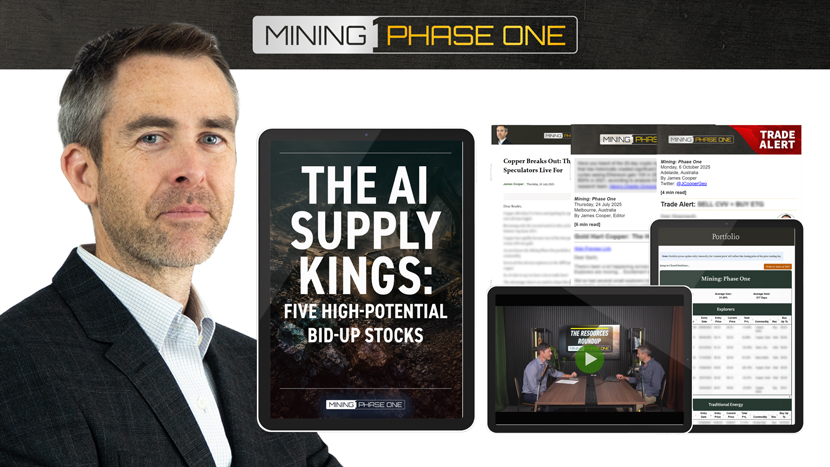
Every month, readers get my deep-dive investment briefings — a full research report on my latest recommendation. The geology, the management, the catalysts, the risks, the buy-up-to price. The same standard of work I used to do inside the industry, all written in plain English for private investors.
I give trade alerts, the moment anything needs action. When it’s time to buy, take profits, or cut a position. The point is, you’re never left wondering what to do.
You’ll get access to the members-only website — every recommendation I’ve ever made, the full portfolio with active guidance on every position, and my complete research archive.
And every quarter, we run the Resources Roundup — a live broadcast where I get on camera, take you through the portfolio position by position, cover the state of the bidding war, and answer member questions.
And because I know some people watching are new to resource investing, they also get my Getting Started series. It walks everyone through the sector from the ground up: how the mining cycle works, why geology matters more than hype, and the ins and outs of my entire prediction system. By the end of it, you’ll read this market better than most professionals.
WOODY
It really is like being brought inside your world, isn’t it — the world you spent 20 years in.
JAMES:
That’s exactly the idea, Woody. Twenty years reading rocks for the industry...now I read them for my members.
WOODY
Now let’s talk about what this costs — because I think this is going to surprise you.
Research at this level isn’t cheap. Institutional investors pay upwards of $10,000 a year for specialist resource coverage that’s frankly no better than this.
Mining: Phase One is officially priced at $3,999 a year. And given what members receive — the recommendations, the alerts, the briefings, the live broadcasts — that’s fair value.
But you won’t pay that today.
If there’s one lesson history teaches us, it’s this:
The people who move first are usually rewarded the most.
That’s true in markets. And it’s true here.
That’s why we’ve made our best offer available to those watching this broadcast.
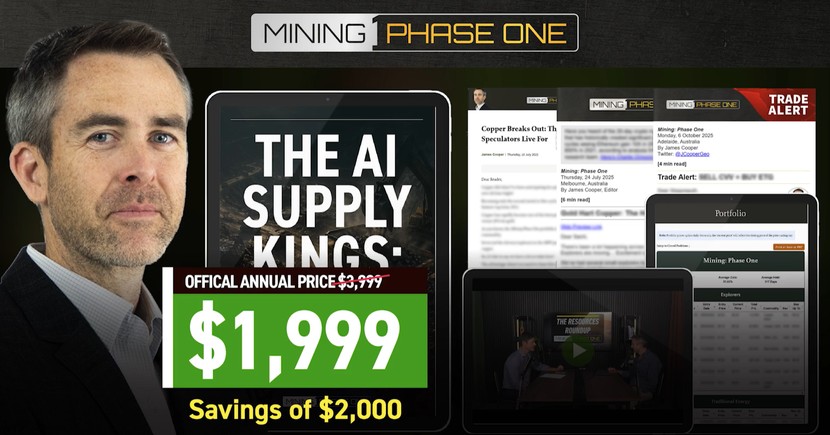
Join today and your first year of Mining: Phase One is just $1,999 — half price. That’s an immediate saving of $2,000.
That great deal is on the table for a very short time. At midnight on Tuesday, 28th of July, the door closes.
Secure your half-price membership now by clicking the link below.
JOIN NOW
You’ll be taken to our secure order page, where everything is clearly explained before you make your decision.
Just remember: time is a factor.
And to make your membership even more valuable, we’re including a library of bonus research the moment you join:
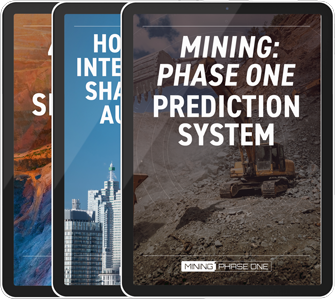 The Mining: Phase One Prediction System — the full playbook behind James’s method, so you can see exactly how he finds these stocks before the crowd...
James Cooper’s Buyout Prediction Playbook — how to spot small miners before the majors swoop...exactly the dynamic you saw with Supply King Number Three...
How to Buy International Shares From Australia — a simple step-by-step guide, because two of the five Supply Kings trade on overseas exchanges and we want nothing standing in your way…
To take all the pressure off of your decision, you get a full 30 days to try everything. Read the Supply Kings report. Explore the members’ site. Watch the briefings. Gain unlimited access to the model portfolio. You’ll have free reign over everything.
If you decide it’s not for you — for any reason — call our Melbourne-based team within 30 days and we’ll refund your membership fee. No hard feelings, no questions asked. The number is on the next page.
If that all sounds good to you, get started by clicking on that link below now.
JOIN NOW
Remember, this offer is only available for a very short time.
WOODY
James, final word. What would you say to anyone still sitting on the fence today?
JAMES:
Woody, set-ups like this come along a handful of times, I’d say, in a century.
A set-up where you have the wealthiest financial entities on Earth battling over mission-critical resources with supplies that cannot easily be ramped up.
I’ve spent 20 years waiting to see these conditions line up. And they are here.
The bidders are at the table. The money is flowing. But the supply cannot easily respond.
This is a terrific opportunity. I’m very excited about it. And I hope everyone watching is, too.
WOODY
Thanks, James.
Look, everything you’ve seen today is already happening.
The bans. The Pentagon’s cheques. The sovereign funds circling Australian assets. The raging bidding war for AI resources. The prices, already igniting.
That means you have three choices…
You can dismiss everything you’ve seen today — decide it’s all hype, and walk away.
You can watch it all unfold from the sidelines, telling yourself you’ll get in later...and join the long list of investors who saw it coming and did nothing.
Or you can act on it — while you’re still early. Positioned before the 2027 Collision, in the five companies James believes are best placed to benefit.
If you choose to take action, click the button below now. Secure your copy of ‘The AI Supply Kings’ while the best deal is on the table. And get in position as the biggest resource bidding war in history accelerates.
JOIN NOW
Okay, that’s it from us.
Thank you to James for sharing his research and insights.
And thanks to you for reading.

JOIN NOW