Dear Reader,

On 20 November 2013, your financial world changed. Radically. No bells rang. No alarms sounded. The ASX didn’t move. Your financial adviser didn’t call.

That afternoon, at Tsinghua University in Beijing, a soft-spoken central banker named Yi Gang made a single remark to a room of economists:

It is no longer in China’s favour to accumulate foreign-exchange reserves.

Twelve words…barely reported outside China…and forgotten within a week.

But that month — November 2013 — China’s holdings of US government debt hit US$1.3 trillion.

The highest ever recorded. Still to this date.

For 30 years, China had done one thing with the money it earned selling the world its goods: it lent it back to America.

So did Japan.

So did Germany.

So did the Saudis.

The world’s savings flowed into US debt, and that river of money kept interest rates low, the dollar strong, and asset prices of shares, houses, everything…rising.

It was the tailwind behind every investment you made.

Yi Gang was announcing, to anyone paying attention, that the world’s biggest saver was closing its account.

Today, China’s holdings of US debt have fallen by nearly half of the 2013 high.

And month after month, the People’s Bank of China has been buying something else instead.

You likely already know what. You’ve watched it hit record high after record high, and maybe wondered why.

The financial press tells you gold is rising because of ‘uncertainty’, war and inflation jitters.

But they are wrong.

And in the next few minutes, I’ll show you why getting it right matters more to your wealth and retirement than anything else you’ll read this year.

Because gold isn’t the story.

Gold is the scoreboard.

The STORY is that the entire system that the Western financial world is built on…

The one that underpins the assets in your super…your bonds…your bank…and your property values…

…has been losing its biggest customer for 13 years.

Now — before I show you the machine behind all this — stop for a second and think about how the last few years have actually felt.

The share market is at record highs. Super balances have never been bigger. On paper, we’ve never been wealthier…

…and yet almost nobody FEELS wealthier.

Despite rate rises, the interest on your savings buys you less every year…

Your groceries, insurance and power bills keep climbing.

And it’s not just money.

You can feel something fraying in the country itself. Politics gets angrier every year. Fewer people trust the institutions they once did. Australia increasingly feels like a nation arguing with itself…without quite knowing what the argument is about.

And maybe you’ve felt it somewhere deeper, too…

In a retirement date that keeps drifting further out of reach…

In a portfolio balance that grows on paper…yet somehow gets you less to spend…

In that nagging sense that you’ve done everything right — worked hard, saved, invested, played by the rules — and yet you’re STILL sliding backwards.

Well, that feeling isn’t in your head.

And it isn’t in your control.

You’ve simply been playing by the rules of a game that changed. Without a word, or the opportunity for your opinion.

And you’ve heard a thousand expert explanations on the news that never quite add up.

Because the experts treat each of these as a separate problem.

They’re not separate problems. They’re one story.

The story that started that afternoon in Beijing.

And there are five assets that Australians hold more of than almost anyone on Earth…that are all directly in the path of what comes next.

By the end of this letter, you’ll understand what these assets are…

And I’ll introduce you to the Australian analyst who saw all this coming in 2013 — and has spent years building, and personally testing, a way through it.

So, let’s begin…

To understand what China set in motion that afternoon, you need to understand the machine it’s walking away from.

Be clear: this is not another ‘US dollar collapse’ story.

It’s not as simple as thinking there will be a binary outcome.

To understand why, let’s take a quick trip through modern monetary history…

How the 80-year money

machine your wealth is built

on is about to break down

The story starts in 1944, in a hotel in New Hampshire.

With the war ending, the victors met at Bretton Woods to design a new financial system.

The deal was simple.

The US dollar would be fixed to gold at $35 an ounce. And every other currency would be fixed to the dollar.

The dollar wasn’t the world’s money because everyone loved America.

It was the world’s money because it was a claim on gold.

A US dollar was a receipt. Foreign governments could hand their dollars back and get physical gold.

For a quarter of a century, it worked.

World trade ran on dollars, and the dollars were as good as gold.

Until they weren’t…

The receipts outrun the vault

America spent…

On Vietnam. On new welfare programs. On military bases across the globe.

Dollars piled up overseas…far more dollars than there was gold in Fort Knox to honour them.

Foreign governments did the maths. France, famously, began handing back its dollars and shipping home the gold. Others soon followed.

The run on the vault had begun.

So, on 15 August 1971 — a Sunday night, in a televised address wedged between episodes of Bonanza — President Richard Nixon simply closed the window.

No more gold for dollars. Effective immediately.

Note what happened there.

The world’s entire monetary system changed on a single day, announced in a speech…and the world just shrugged.

Of course, the White House and economists called it a ‘temporary suspension’.

One that’s now lasted 55 years.

And the decade that followed showed the world exactly what ‘unanchored’ money means.

Inflation tore through the West.

Ordinary savers watched their cash rot.

By 1980, $1 would buy you what it would only have cost 53 cents to buy six years before.

And gold — freed from its $35 tether — ran from $35 an ounce to over $800.

Keep that order of events in mind.

First, the system broke. THEN gold took off.

It’s the same sequence playing out right now.

The greatest recycling

machine ever built

The dollar should have died in the 1970s.

A currency backed by nothing, issued by a government printing it freely?

History has one ending for that story.

But instead, the dollar found a new anchor.

Not gold this time. Oil.

After the 1973 oil shock, an understanding took shape between Washington and the big oil producers, led by Saudi Arabia.

Oil — the one commodity every nation must buy — would be priced and traded in dollars.

And the flood of dollars the producers earned would flow back into American government bonds.

Think about what that did…

If you wanted energy, you needed dollars.

The dollar was no longer a claim on gold. It was a claim on the modern world.

Then the machine really got going…and this is the part you lived through, whether you knew it or not.

Japan sold America cars and lent the profits back by buying US bonds. Germany did the same. So did the Saudis.

And from the 2000s, China did it on a scale no one had ever seen…selling America everything, and recycling trillions into US Treasuries.

Now, you need to follow this chain…because the wealth you’ve built through your investments over the last three decades sits right at the end of it:

The world’s savings poured into US bonds.

That torrent of money held American interest rates — the price of money for the whole world — down for 30 straight years.

Cheap money flowed into everything with a price on it.

Shares…bonds…and above all, property.

Australia wasn’t watching this machine from the outside.

We were bolted right onto it.

China’s boom devoured our iron ore and coal.

As a result, our economy ran a quarter-century without a recession.

Our house prices doubled…and then doubled again.

Our super funds grew fat on a Wall Street inflated by the world’s savings.

Every investment rule you’ve ever been taught…buy the dip, property doubles every decade, bonds are the safe part…isn’t timeless wisdom.

It was the operating manual for this one machine, during the decades the money flowed one way.

Then…the machine nearly killed itself.

2008: The crack

The global financial crisis showed the world what sat at the bottom of the dollar system: debt stacked on debt.

The fix?

The Federal Reserve printed money on a scale never attempted in peacetime and bought the bonds no one else would.

The West called it a rescue.

Beijing called it something else: evidence.

Evidence that its trillion-dollar pile of American IOUs could be diluted at will, by a committee in Washington, whenever Washington was in trouble.

China spent the next five years thinking about that.

Then, in November 2013, in a lecture hall at Tsinghua University, it announced its conclusion.

2013: The exit

You know what Yi Gang said. Twelve words.

Again: It is no longer in China’s favour to accumulate foreign-exchange reserves.

That month, China’s holdings of US Treasuries hit $1.3 trillion — the highest ever recorded, before or since.

That was the moment the world’s biggest saver changed direction.

Gold fell for the next two years.

But China kept accumulating gold…the world’s biggest gold producer, letting none of its own mined metal leave the country…and buying more besides.

A speculator chases price.

But a central bank changing its savings system doesn’t care about price.

It cares about getting out of the old system.

2022: The day the exit

became a stampede

For nine years, China’s exit stayed fairly orderly.

Then the West did something that made every central banker in the world sit up in bed.

In February 2022, after Russia invaded Ukraine, the US and Europe froze roughly $300 billion of Russia’s foreign reserves.

By decree, Western authorities effectively cancelled Russia’s savings its bonds, its deposits, decades of national surplus overnight.

Whatever you think of the politics, understand what every finance minister from Riyadh to Delhi to Beijing learned that week:

Your national funds, held in someone else’s currency, are a promise that can be revoked.

Central banks have bought more gold in the years since than at any time since the Bretton Woods era.

Not hedge funds. Nor gold bugs.

The most conservative
institutions on
Earth are
switching their savings
into
the one asset that’s nobody’s
promise and no one’s
to freeze…

That’s why gold has smashed record after record.

Put simply: the gold market has a new kind of buyer.

The old buyers were traders and savers reacting to fear. They bought gold when things looked scary…and sold it again when the panic passed.

The new buyers are governments — moving their national savings out of a system they no longer trust.

They don’t sell when the panic passes. They’re not trading. They’re moving.

Which brings us to what this means for you…

When the world stops recycling its savings into the dollar system, it means the system is no longer working. 

It means higher rates for longer…

It means governments fighting companies for scarce capital…

It means central banks facing an impossible choice: print money to fund their governments…or fight inflation. They can’t do both at once.

And it means five assets in particular — the five that make up almost the entire net worth of the average Australian investorsit directly in the path…

Let’s take them in the order the fuse burns…

Time-bomb #1:
The ‘safe’ half of your portfolio

Ask your financial adviser what the defensive part of your portfolio is, and you’ll get one word: bonds.

Classic advice from the old machine.

For 40 years, while the world’s savings poured into the dollar system and interest rates fell, bonds went up, decade after decade.

Bonds became ‘safe’.

Nobody selling you a retirement product has ever worked in a world where that wasn’t true.

But you’ve already felt the first tremor. You may not have realised what it was.

2022 was the worst year for government bonds in modern financial history.

The ‘safe’ half of Australian super funds went backwards — at the same time as shares fell.

The one thing diversification promised to protect you from…happened.

You were told it was a freak event. Bad luck. A once-in-a-generation anomaly.

It wasn’t. It was from the machine changing gear.

The surplus nations, led by China — once the biggest, most reliable buyers of government debt — have gone, and leveraged hedge funds now stand in their place, running borrowed-money trades that work beautifully right up until the moment volatility hits.

When the reliable buyer of last resort becomes a nervous trader, yields don’t just rise. They lurch.

Every lurch takes a bite out of the asset class your retirement product calls ‘conservative’.

And rising yields don’t stay in the bond market. They go looking for everything else.

And here’s the twist…

AMERICA KNOWS

Now…you might be thinking this is one of those ‘death of the dollar’ stories.

Where America is the victim of some foreign plot to dethrone its currency.

It’s not.

Washington has worked out that the old system no longer serves America either.

Think about what the reserve-currency ‘privilege’ actually costs the US…

To supply the world with dollars, America had to run endless trade deficits.

Its factories moved offshore. Its industrial towns hollowed out.

Wall Street boomed while Main Street rusted.

So…what do you think Trump’s tariffs are really about?

The trade wars…the pressure on allies to fund their own defence…the demands to bring manufacturing home…

Whatever you think of the politics, the direction is unmistakable:

America is now trying to wind down its own machine.

Because you cannot re-industrialise AND keep flooding the world with dollars.

You cannot bring the factories home AND keep running the deficits that fed the recycling loop.

One must give.

So, understand what’s really happening here…

This is not China attacking the dollar system while America defends it.

BOTH ends of the 80-year bargain are now looking for the exit.

The seller of goods no longer wants the IOUs.

The buyer of goods no longer wants the arrangement.

Nobody is defending the old machine anymore.

The players are negotiating their way out of it.

There’s just one group that hasn’t got the memo…

The people managing YOUR money.

Time-bomb #2:
Superannuation’s record

bet on Wall Street

Here’s something most Australians don’t know about their own money.

Your super fund now holds more foreign shares than Australian ones.

And your fund places the overwhelming share of that foreign money in one place: the US market.

This means that Australia’s retirement savings are now, in large part, a leveraged bet on one of the most expensive stock markets in the world.

Here’s what the last 40 years of American market magic actually was:

Wall Street was also the destination of the recycling machine.

The world’s savings initially went into US government bonds. But as the system developed, it went into shares, private equity and venture capital too.

The US economy de-industrialised and went into hyper-financialisaton. This money financed the initial tech boom that gave us the internet and is helping to finance the massive AI investment boom.

This recycling of global capital into US assets pushed rates down and valuations up.

The stocks your super fund owns most of are some of the longest-duration, highest-priced assets on Earth — the exact assets a higher-yield world reprices first and hardest.

Nobody at your super fund is going to ring you about this.

But the repricing doesn’t stop at your super statement.

Australia’s connection to this global machine runs in both directions.

We invest our savings INTO it via our super funds.

And we borrow FROM it — hundreds of billions of dollars, flowing through our banks, at prices set in the same global bond market the world’s savers are now walking away from.

And where has most of that borrowed money ended up?

You guessed it…

Time-bomb #3:
The ‘certainty’ of property

Australian property is not a market.

It’s practically a religion.

Prices double every decade. Bricks and mortar never let you down. Get in whenever you can!

Like every rule you’ve been taught, it’s not timeless wisdom.

It’s the operating manual for one specific machine — the 35-year decline in the cost of money.

In 1990, Australian mortgage rates hit 17%. Then, for the next three decades, they fell…and fell…and fell.

House prices tripled, and tripled again, because every year, almost without fail, Australians could borrow more against the same income.

That’s it. That’s the miracle.

Now run the machine backwards.

Australia’s banks don’t fund your mortgage from Australian savings alone.

They borrow offshore, in the global market, at prices set by US bond yields.

When the world’s savers walk away from the dollar system and yields grind higher, Australia imports that higher cost of money straight into its mortgage belt.

The RBA can trim at the edges. But it cannot repeal the global price of capital.

But here’s the bit that catches almost every property investor off guard:

Your house price can go up and STILL make you poorer.

In an inflationary era, prices can rise in dollars while falling in real terms, while rates, costs, taxes and inflation eat the difference.

The number on the contract gets bigger. What it buys gets smaller.

Property investors will stare at ‘record prices’ and wonder why they’re going backwards.

Which brings us to the institutions holding the other side of every one of those mortgages…

Time-bomb #4:
The four companies holding

your wealth hostage

Look at where Australians keep their money…

Shares in the Big Four banks — directly, or through every index fund and super default option in the country.

The banks plus the big miners aren’t just in the Australian market.

They practically are the Australian market.

Now look at where the Big Four sit in this story.

It’s the worst seat in the building.

On one side: their funding.

The marginal dollar borrowed offshore, in the dollar system, at prices now set by a bond market that’s lost its most reliable customers.

Now, to be fair: Australian deposits fund a big share of our mortgages too.

But the banks have never been able to fund it all at home.

The gap gets topped up in offshore wholesale markets — and that offshore funding is their Achilles heel.

It’s exactly what nearly brought them undone in 2008.

Every step higher in global yields raises the cost of the raw material banks sell — money.

On the other side: their collateral.

Among the most indebted households in the developed world, holding the most expensive property on Earth, serviced by incomes that ultimately trace back to one customer: China.

The same China is deliberately, publicly, transitioning away from the construction-heavy, commodity-devouring model that made Australia rich.

Squeezed on the funding side by the end of cheap dollars. Squeezed on the asset side by the end of the China boom.

The two forces in this story converge on precisely the four companies Australians own more of than anything else.

Bank shares have been the great Australian wealth compounder for three decades — the dividends, the franking credits, the sleep-at-night certainty.

That entire experience took place inside the machine. There is no rulebook for these companies outside it.

So, four ticking time-bombs so far.

But I’ve saved the biggest for last — and I’d wager it’s the one most people never once thought of as a risk…

Time-bomb #5:
The money itself

Ask yourself the question every government in the Western world is looking at:

When the old buyers won’t fund your deficits at affordable rates — what do you do?

Because the deficits aren’t shrinking. Defence spending is exploding as America tells its allies to fend for themselves.

Governments are pouring borrowed billions into energy, chips and industry. Private markets are torching capital on the AI buildout.

Everyone, everywhere, wants to borrow more — at the exact moment the world’s savers want to lend less.

There are only three exits:

  1. Governments can meaningfully slash spending (find me the democracy that will realistically do this!).
  2. They can let interest rates rise until the bond market is satisfied — and detonate bombs one-through-four overnight (unlikely!).
  3. OR…they can do what governments have always done at the end of every monetary era in history: make the central bank buy the bonds.

In other words: PRINT.

That’s the fifth bomb — and it’s wired to the one asset you’ve never doubted.

Your cash. Term deposits. The fiat currency sitting in your bank account.

The ‘safest thing there is’.

Of course, when the big print happens, I’m not saying your money will go away.

There’ll be no red number on a screen. Your balance won’t fall.

But it will buy less and less — year after year — as the losses the bond market refused to take are transferred to you.

And we Australians get a second serving, too: when global capital ranks currencies in a printing world, the dollar of an indebted, commodity-dependent nation doesn’t rank high.

Everything we import — fuel, cars, medicine, travel — costs more in a falling Aussie dollar.

Inflation from the money, and inflation from the exchange rate.

The economists have a polite name for this: financial repression.

The impolite translation: the people who saved pay for the people who borrowed.

And now — finally — you can see the whole board.

Everything you own is a claim on a system whose biggest customers are leaving.

Bonds are promises to pay.

Shares are claims on economies built on cheap promises.

Property is a leveraged bet on the promises staying cheap.

Cash is the promise.

So, ask the question China asked itself in a lecture hall 13 years ago:

In a world drowning in promises, what do you own that isn’t one?

There’s only one honest answer. It’s the answer every major central bank has been acting on, month after month, for years.

They’re not buying gold because they’re frightened.

They’re buying it because they’ve done the maths you’ve just done.

The world’s most powerful financial institutions have looked at the same five bombs you’ve just seen…and every one of them has reached the same answer.

The only people still debating it are the ones who haven’t seen the whole picture yet.

People like your super fund. Your bank. Your financial adviser.

And maybe — until today — you.

The question you’re
really asking

I know the question forming in your head right now, because it’s the question everyone asks at this point:

Gold? Isn’t it a bit late for that?

Fair question.

Gold has smashed record after record in the last two years, despite taking a breather recently.

If you don’t own any, every new high feels like a door closing.

But stay with me here, because this is the single most important thing I’ll say today:

Whether it’s ‘too late’ depends entirely on what YOU think gold is doing.

If gold is a trade — a hot asset having a run — then yes. Records mean you’re late. Late to a trade is the worst place in investing.

But if gold is what I’ve spent this letter showing you it is — the destination of the world’s savings as an 80-year system winds down — then the records mean something else entirely.

They mean confirmation.

Look at who’s actually buying…

For three years running, the world’s central banks bought over a thousand tonnes of gold a year.

It’s accumulation on a scale not seen since the 1960s, back when gold was the official foundation of the system.

In the latest central bank survey, nearly nine in 10 reserve managers said they expect official gold holdings to keep growing.

Almost no ordinary investor knows this:

Gold has now overtaken
US
government bonds as the
most-
held reserve asset on Earth

Just consider what that means.

The thing that backed the world’s money until 1971...has reclaimed the top spot...and it didn’t even make the evening news.

These are the most conservative, best-informed institutions in existence — the ones with entire economics departments and national wealth on the line.

They didn’t buy the dip.

They bought and kept buying.

Institutions like that don’t chase trades.

They change systems.

And once you see it, the ‘too late’ question dissolves — and a much better question takes its place:

Not ‘Should I buy gold?’

But ‘How does an Australian household position itself the way central banks are positioning nations?’

Because those are very different problems.

A central bank can buy 20 tonnes and sit on it for a century.

You can’t.

You have a retirement to fund, a family to think about, and a finite number of years for this to matter.

You don’t just need protection from the five bombs.

You need the other side of them.

The gains that flow to the people positioned correctly while everything else reprices.

Which is exactly why I’m writing to you...

Introducing the man

who saw it all in 2013

My name is James Woodburn. I’m the publisher and CEO of Fat Tail Investment Research.

I’ve been publishing contrarian financial research in the UK and Australia since 2005.

Twenty years of it teaches you one brutal distinction: the difference between analysts who can explain an idea...and the rare few who ran their own money through it, for years, before anyone was watching.

The first kind are everywhere. The second kind I can count on one hand.

This is the part of this story I’ve been waiting to tell you.

Remember the date this all started? November 2013. The month China’s holdings of US debt hit their all-time peak.

The month Yi Gang stood up at Tsinghua and announced, to a room that wasn’t listening, that the biggest saver on Earth was done accumulating America’s promises.

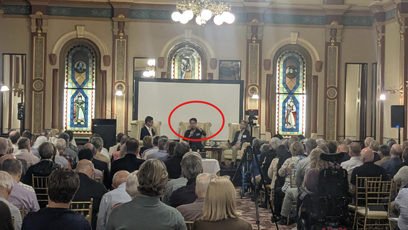
That same year — 2013 — an analyst in Sydney named Brian Chu took $170,000 of his own family’s money and did the same thing.

Brian Chu

That same year — 2013 — an analyst in Sydney named Brian Chu took $170,000 of his own family’s money and did the same thing.

Now, I’m not going to pretend Brian was sitting in that lecture hall. He wasn’t. He didn’t need to be.

He was reading the same numbers the PBOC was reading.

And he reached the same conclusion the world’s central banks have spent the 13 years since acting on:

In a world built entirely on promises, own the thing that isn’t one.

While everyone else was chasing the post-GFC bull market, Brian moved his family’s wealth onto a gold foundation — and then, crucially, built a complete system on top of it.

This isn’t a doomsday bunker.

But a working, breathing, wealth-building machine.

Then he tested it. With his own money. Through the most demanding laboratory there is: 13 years and three complete gold market cycles — including the brutal 2013–2015 bear market that shook out every tourist, fair-weather bull and ‘gold bug’ in the country.

That’s the part you need to hear.

Brian started buying into a falling market.

Just like China did.

Because — just like China — he wasn’t trading. He was switching systems.

The result?

That $170,000 has grown to more than $1.5 million.
That works out to an average of around 18% compounded, every year, for 13 straight years.

Had he simply left it in the Australian share market?

He’d have roughly $525,000 today.

Brian tripled the market. Through three cycles. In real time. With his family’s money on the line.

And along the way he did things that tell you more about the man than any number can.

He held one position through an 88% drawdown — 88%! — because he’d done the work and knew what he owned...and that single position eventually returned more than $100,000 on a $35,000 outlay when the cycle turned.

That’s not luck. Luck doesn’t survive an 88% drawdown. Conviction built on genuine analysis does.

I’ll tell you something else about Brian…

He’s not a big-picture salesman. He’s almost the opposite — a concrete, numbers first, show-me-the-drill-results analyst who’d rather walk you through a mine’s cost curve than give you a speech about the dollar.

He built his own valuation tool for gold producers because the off-the-shelf ones weren’t good enough.

He answers member emails personally.

In other words: the story I’ve told you today is the why.

Brian is the how.

And in 20 years of financial publishing, I’ve never seen a cleaner fit between the two.

He calls his method the Go Your Own Way Blueprint.

It has four layers.

And, as I walk through them, I want you to think about how each layer is built to defuse one of the five time-bombs we’ve just walked through…

Layer 1: PROTECTION
Your own personal
gold standard

This is the foundation. Physical gold and silver — real metal, in your possession or allocated storage, answerable to no institution.

Remember the fifth time-bomb — the money itself. The one asset with no bad days, but just steadily losing purchasing power every year as the losses of the old system get transferred to savers.

Layer 1 is its exact mirror image: the one asset that is nobody’s promise.

It can’t be printed into dilution, defaulted on, or frozen by decree.

The world learned that last lesson in 2022 — it’s precisely why the central banks moved.

Brian holds 80–90% of his physical position in gold, the rest in silver, and he’ll tell you exactly why — along with which dealers he trusts, how to store it (never a bank safety deposit box) and every reporting threshold you need to know in Australia.

Brian’s straight talk is why I trust him: this layer will not make you rich. It’s not supposed to.

It’s insurance — the part of your wealth that simply cannot be touched, whatever happens next.

Anyone who tells you bullion alone is a wealth strategy is selling you half an idea.

Layer 2: STAY MOBILE
The metal you can move

The same protection, in tradeable form — ASX-listed gold ETFs you can buy and sell in seconds.

Physical metal is magnificent sitting still — but you can’t rebalance a bar, or take partial profits from a coin, or add to a position at 11am on a Tuesday when the signal is right.

In a repricing as large as the one underway, mobility is what separates investors who capture the move from those who watch it.

There are four gold ETFs on the ASX.

They are not the same. Brian will tell you the differences — and name his favourite.

Layer 3: GROW & OUTPERFORM
The engine of your
future wealth

This is where Brian made his real money.

And it’s where the five bombs get answered in full — because this layer doesn’t just shelter you from the repricing.

It puts you on the receiving end of it.

Here’s what I mean…

A well-run gold miner pulls metal out of the ground at a roughly fixed cost.

So, when the gold price rises, almost every extra dollar drops straight to the bottom line.

A 20% move in gold can become 60%, 80%, sometimes far more in the right stock — because you’re not buying the metal, you’re buying the operating leverage of a business sitting on top of the trend.

That’s the upside.

Now the truth that most gold promoters won’t tell you: this is also where people get slaughtered.

You see, not every miner is a good business.

Many aren’t — even in a raging bull market. Roughly one in 5,000 exploration sites ever becomes a producing mine.

The difference between a 500% winner and a zero usually isn’t the gold price at all.

It’s the deposit, the management, and where the company sits in its life cycle.

This is Brian’s home ground. Thirteen years of it.

He knows the seven stages in the life of a mining company — and why you only ever want to own two of them.

He knows why the big famous producers rally first but fall hardest, why explorers eat capital through endless dilution, and why the unglamorous mid-tier producers have delivered his best risk-adjusted returns across every single cycle.

He built his own proprietary valuation tool — his VPM multiple — specifically for gold producers, because nothing on the market measured what actually mattered.

Right now, Brian runs a live portfolio of 17 Australian gold stocks, sitting on an average gain of 63%.

Each one was selected for what he believes it’ll do over the next two years of this cycle.

Now, this layer carries real risk. These are businesses, not bullion — operational risk, management risk, market risk, all stacked on top of the gold price.

And I’ll be blunt: Brian doesn’t get every pick right. Nobody does. Individual gold stocks can and do lose money — if one doesn’t go to plan, you can lose some or all of what you put into it.

Some will lose money even while gold rises. That’s precisely why doing it alone, on hot tips and hunches, is how most Australians get hurt in this sector.

And why having a man with three cycles of scar tissue is a real advantage.

Layer 4: SUPERCHARGE
The metals powering
the next machine

And now the newest layer — one Brian has only just begun rolling out. You’re among the first Australians to hear about it.

And it doesn’t take you away from the gold strategy.

It supercharges it.

Think back to the story I’ve told you today.

China has spent the last 13 years slowly but surely exiting the dollar system.

But there’s a part of the story I haven’t mentioned yet…

The same country walking away from the West’s financial system...controls the supply of the very metals the West’s future is built on.

The AI buildout — every data centre, every chip. The energy transition — every battery, every turbine.

And the rearmament now underway across the developed world as America tells its allies to fend for themselves.

Three of the biggest capital-devouring forces on the planet, all pulling on the same short list of strategic metals...with one country sitting on the chokepoint.

It’s the same story. The same protagonist. The world scrambling to build resilience against the same dependency.

It’s the next chapter of the exact same story — and Brian is already positioning for it.

Part one: several deposits already inside his 16-stock portfolio aren’t pure gold plays at all.

They’re polymetallic — gold sitting alongside strategic metals in the same ground.

The gold got them noticed. The rest sits there almost unpriced by the market.

Part two: a small, disciplined allocation to companies where the strategic metal is the main game — the same measured approach he took with speculative explorers in 2022, before the 2024 rotation proved him right.

Brian believes this could end up the most powerful layer of all four.

Higher risk than the gold stocks, and he says so plainly.

But if the story you’ve read today continues to play out, Layer 4 could pay you a second time — because the same forces driving gold are driving these metals too.

Here’s how you get

access to all of it

For the past several years, Brian has published everything — the full blueprint, the live portfolio, every buy, sell and exit, explained in plain language as he makes them — in a private members’ advisory called The Australian Gold Report.

I’d like to invite you to subscribe today under a fully guaranteed trial period in the first 30 days.

When you do, here’s what you’ll get immediate access to…

Brian’s complete written record, Gold’s True Message
a decade of research across three full cycles, distilled: the bullion playbook, the ETF guide, the seven stages, the VPM multiple, case studies of stocks that returned several hundred to over 6,000% and what separated them from the ones that went to zero.

Plus, his brand-new briefing, Go Your Own Way: GOING FORWARD — where things stand right now, and his three core plays to put to work the moment you finish reading.

Plus, full access to Brian’s live 17-stock portfolio. Every new recommendation. Sell signals. Quarterly reviews. A direct members-only email line to Brian himself, and quarterly Q&A videos where he answers your questions.
Let me spell out what that actually means in practice — because ‘membership’ undersells it.
You’ll get immediate access to everything Brian publishes in The Australian Gold Report. His current reading of the gold market…the monetary shift we’ve walked through today…and exactly where the portfolio stands.

When he finds a new opportunity, you get the full investment case in plain English. What the company does. What he thinks it’s worth. Why now. And how to position.


When it’s time to take profits — or cut a position that isn’t working — you get the sell signal just as clearly.

Every quarter, you get a full review of the precious metals sector and every company on the buy list.

And running underneath it all: Brian keeps watch on the machine itself. The central bank buying…the Treasury flows…the signals we’ve covered today — tracked month by month, so you’ll see how this story is unfolding long before it reaches the nightly news.

Got a question? You can email Brian directly through the members-only address, and every quarter he records a Q&A video answering members’ questions.

He can’t give personal advice — but he’ll give you everything he knows, in general terms, so you can make your own informed decisions.

So, what’s a fair

price for all this?

Brian’s not a financial planner, and nothing in his research is personal advice.

But consider what personal advice costs…

Many planners charge several hundred dollars — sometimes a thousand — for a single afternoon consultation. And what you often walk away with is a plan built around somebody else’s approved product list.

The official membership price of The Australian Gold Report is $499 a year.

Think about that number like this…

What would you pay to properly understand the biggest shift in the world’s money system in 55 years — while it’s still underway — with a guide who’s been positioned for it since 2013?

What would you pay to watch every move he makes with his own family’s money, explained as he makes it?

If the story you’ve read today is even half right, the next decade is going to be brutal on investors who keep running the old playbook…and generous to the small number who reposition early.

Against those stakes, $499 a year is a rounding error.

Through this invitation, you won’t pay anything close to that.

You’ll pay just $99 — 80% off — for your entire first year.

That works out to less than $2 a week…for every recommendation, every report, every signal, and every word of research I’ve described today.

And you can click here to take up this offer.

Look, neither Brian nor I can promise you outperformance.

Nobody honestly can, and you should run from anyone who does.

And let me be equally straight about the risk: gold stocks are high-risk investments. Brian doesn’t get every recommendation right — no analyst does. If things don’t go as planned, you could lose some, or all, of the money you put in.

What I can promise is this: you will never be left wondering what Brian’s current strategy is, or why.

Every position. Every decision. Explained as he makes it.

Now it’s up to you

Let me leave you where we started.

For 80 years, the world ran on one machine.

The world’s savings flowed into America’s debt…the price of money fell for decades…and everything Australians own — the super, the bonds, the property, the bank shares, the dollars themselves — was priced for that world.

In November 2013, that world began to end.

Nothing about this story is hidden. The Treasury data is public. The central bank gold buying is public. Gold overtaking US bonds as the world’s most-held reserve asset…it’s all public.

It’s all sitting in plain sight, waiting to be connected.

Most Australians never will connect it though. They’ll keep running the old playbook, waiting for the old world to come back.

It isn’t coming back.

But a small number will do what the world’s central banks are doing. What China has been doing since 2013.

What Brian Chu has been doing since 2013. They’ll look at the direction of travel — and reposition while it still counts.

Whatever you decide today, decide it deliberately. Because doing nothing is also a decision…

It’s a decision to keep everything you’ve built inside a system whose biggest savers are heading for the exit.

Thirteen years ago, in a lecture hall almost nobody was watching, the biggest saver on Earth decided the old system’s promises weren’t worth accumulating anymore.

That same year, one Australian analyst reached the same conclusion — and built his family’s future on it.

Every year since has proved them both right.

Now it’s your turn to decide.

Sincerely,

James Woodburn

James Woodburn,
Publisher and CEO, Fat Tail Investment Research

Click Here to Subscribe Now